
my uttarakhand news Bureau
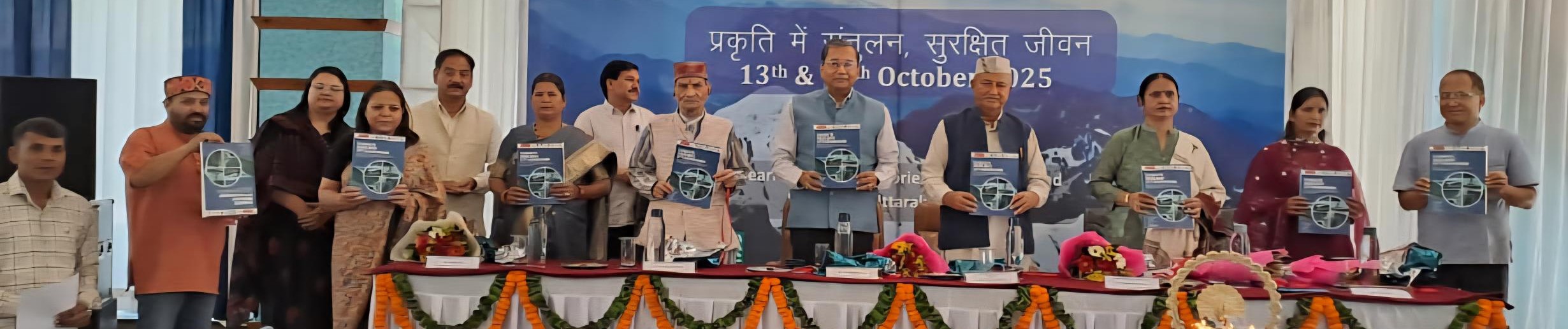
Dehradun, 13 Oct: A two-day National Consultation on Collaborative Action for Climate Resilience concluded successfully, bringing together over 80 distinguished participants, including the Vice Chairman of the Planning Commission, Government of Uttarakhand, representatives from IMD Dehradun, eminent professors from Doon University, climate activists, geologists, students, and community leaders.
The consultation was jointly organised by five leading organizations — HIMAD, DKD, AMAN, HESCO, and TPVS — and inaugurated under the leadership of Dr Pundir. The discussions centred on strengthening local adaptation practices, advancing disaster management strategies, and promoting carbon sequestration initiatives. Participants emphasised the importance of aligning community-driven efforts with state-level climate action policies to build a resilient and sustainable Uttarakhand.
During the event, DKD launched a comprehensive documentation titled “Comprehensive Documentation and Innovative Research Action on Climate Change Prevention, Mitigation & Adaptation Strategies for a Climate Resilient Uttarakhand.”
Raj Shekhar Joshi, Vice – Chairman, Planning Commission, Government of Uttarakhand, highlighted the urgent need to address the impact of urbanisation on climate change and emphasised the role of eco-club development and strategic planning. His address focused on three key areas — (1) Ecosystem Modelling, (2) Strategic Interventions, and (3) Action and Outcome-based Economic Models.
Prof Kusum Arunachalam of Doon University discussed forest ecosystem dynamics and called for the reclamation of degraded forest areas to strengthen carbon credit initiatives. Prof Virendra Painuly underscored the need to integrate traditional and indigenous knowledge systems, particularly the wisdom of elderly communities, into adaptation policies, and promoted agroforestry as a viable climate-resilient approach.
The technical sessions, led by Dr Pallavi, Prof MS Panwar, and Dr Gaurav from Doon University, explored “Understanding the Impact of Climate Change – Dimensions, Dynamics, and Evidence”. They presented findings from both primary and secondary research on Uttarakhand’s climate landscape, identifying critical gaps in the State Climate Action Plan and advocating for community-based and Panchayat-level planning to ensure localised climate action.
Case studies from Kedarnath and Joshimath disasters were discussed to highlight on-ground realities of climate-induced challenges.
Representing TDH Germany (North India), Mohd Salim emphasised the need to recognise ecological rights as fundamental rights, warning that without such inclusion, future generations would continue to bear the severe consequences of climate change.
Environmentalist Raghu Tiwari noted a new and alarming trend in Uttarakhand’s climate pattern: “This year, due to global warming, the monsoon extended unusually deep into the Tibetan plateau, while the arrival of western disturbances in August indicates serious signs of climate change.”
Dr Mohan Panwar shared encouraging results from climate-resilient agriculture projects, noting that farmers have shifted from cultivating two or three crops in irrigated areas to growing 16–17 crop varieties even in rain-fed regions. This, he said, reflects improved agricultural sustainability, crop diversity, and local adaptation to climate change.
The consultation concluded with a strong call for integrating local climate change concerns into the State Climate Action Plan and ensuring that community-based evidence and traditional wisdom shape Uttarakhand’s future climate policies.
About The Author