Arun Pratap Singh
my uttarakhand news Bureau
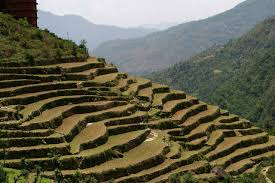
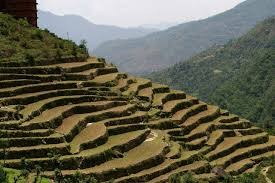
DEHRADUN, 27 Dec: The current year has not proved encouraging for agriculture in Uttarakhand. The official figures indicate a decline in the production of several major crops, alongside a steady reduction in cultivable land. The situation is particularly worrying in the Garhwal division, where crop yields have fallen even as the farming here is already being constrained by limited resources and challenges like outmigration, climate change and increasing wildlife menace. The combined impact of shrinking agricultural land and declining output has painted a grim picture for the farming sector, which continues to remain the backbone of livelihoods in large parts of the state.
The government data for 2025 clearly point towards a downward trend in the production of many key crops. Ironically, this is the case even as a large section of Uttarakhand’s population continues to depend on agriculture and animal husbandry. The conditions in this sector have shown little improvement. In the hill districts, farming is not merely an economic activity but an intrinsic part of social and cultural life. However, erratic weather patterns, increasing damage by wild animals, inadequate irrigation facilities and the limited on-ground impact of government schemes have steadily eroded farmers’ confidence.
A closer look at crop-wise data reveals the extent of the problem. Potato production in Uttarakhand stood at 1,29,920 metric tonnes in 2025. Although this figure is marginally higher than the 1,24,351 metric tonnes recorded in 2024, it remains significantly below the output of 1,33,485 metric tonnes in 2023 and 1,53,620 metric tonnes in 2022. This indicates a decline of more than 23,000 metric tonnes over the past three years, a drop that has directly affected farmers’ incomes, particularly in hill districts where potatoes remain a key cash crop because Pahari Aloo is considered to be qualitatively superior to the potato in the plains and demands premium prices in the market.
A similar trend has been observed in pulses. In 2025, pulse production in the state was recorded at 48,056 metric tonnes, slightly higher than the 46,777 metric tonnes in 2024. However, production stood at 53,658 metric tonnes in 2023 and 57,231 metric tonnes in 2022, reflecting a decline of over 9,000 metric tonnes within three years. Ginger, peas, rice and several other crops have also shown weaker figures in 2025 compared to previous years. In the Garhwal region, the fall in the production of cash crops such as ginger and potatoes has been particularly sharp. Here the so called incentives and schemes meant for hill agriculture seem to have failed to deliver adequate results on the ground.
There has, however, been some relief in wheat production. In 2025, Uttarakhand produced a total of 9,39,263 metric tonnes of wheat, an increase over 8,62,423 metric tonnes in 2024 and 8,31,575 metric tonnes in 2023. This rise has been attributed by officials to better seed availability and relatively favourable weather conditions in parts of the plains. This can be claimed to be a positive sign amid an otherwise bleak scenario.
The rice production, on the other hand, has again emerged as a major concern. The total rice output in 2025 was recorded at 5,85,455 metric tonnes, sharply lower than 6,72,166 metric tonnes in 2024. In 2023, rice production stood at 6,40,997 metric tonnes, while in 2022 it was as high as 7,08,888 metric tonnes. Compared to 2022, the fall in rice production by 2025 has been substantial, which is a pointer towards vulnerability of the rain-fed agriculture in both hill and plain districts.
Farmers across Garhwal and Kumaon have openly expressed growing disillusionment with agriculture, stating that farming is no longer economically viable under current conditions. Crop damage caused by wild animals, lack of remunerative prices in markets, rising input costs for seeds, fertilisers and labour, and limited access to storage and processing facilities are forcing many to abandon farming altogether. If corrective steps are not taken in time, they warn, the situation could worsen further in the coming years. Of course, the government claims to be actively promoting cultivation and marketing of traditional course grains like Mandua, Jhangora, red hill rice and other millet crops which are usually grown traditionally in the hills and are generally organic in nature, as the use of commercial chemical fertilisers and pesticides is very limited.
The continuous decline in agricultural land remains one of the biggest structural challenges confronting the state is. Agriculture Minister Ganesh Joshi has acknowledged that Uttarakhand has lost nearly 27 per cent of its cultivable land over the past 25 years. At the time of the state’s formation, Uttarakhand had about 7.70 lakh hectares of agricultural land, which has now reduced to around 5.68 lakh hectares. Nearly two lakh hectares have been lost to development projects, urban expansion and unplanned construction, resulting in the rapid spread of concrete settlements.
The problem is compounded by inadequate irrigation infrastructure. Of the state’s total agricultural land, irrigation facilities are available in only about 3.53 lakh hectares. In mountainous regions, where farming largely depends on rainfall, erratic monsoons and changing climate patterns have had a direct and severe impact on crop yields. According to the official agriculture department data, less than half of the net sown area in hill districts is assured of irrigation, making unirrigated area particularly vulnerable.
Wildlife conflict has also emerged as a major threat to agriculture. In the hills, monkeys, wild boars, bears and other animals are destroying standing crops, while in the plains, incidents involving elephants have increased. Livestock rearing has also become increasingly risky due to frequent attacks by wild animals, leading to heavy financial losses for farmers. The data available from forest and agriculture departments indicate that compensation claims related to crop and livestock damage have risen steadily in recent years, reflecting the scale of the problem.
Overall, the agricultural data for 2025 send a clear warning that unless strong and sustained measures are taken, the future of farming in Uttarakhand could slip deeper into crisis. Protecting agricultural land, expanding irrigation coverage, ensuring effective wildlife management, and providing farmers with better market access, technology and incentives have emerged as pressing priorities.
At the same time, Agriculture Minister Ganesh Joshi has asserted that central government schemes are being implemented effectively in the state and that agricultural production is showing signs of improvement in certain sectors. He has maintained that farmers are being connected with new technologies and modern agricultural practices, which are expected to yield better results in the coming years. However, he has also conceded that the sharp decline in cultivable land over the past 25 years remains a serious concern, and saving the remaining farmland has become one of the most critical challenges for the state.
About The Author