
my uttarakhand news Bureau
Dehradun, 31 Dec: In the year 2026, a new action plan will be prepared under NEP–2020 for the expansion and strengthening of the state’s education system. The plan will focus on improving the Gross Enrolment Ratio (GER) and the Performance Grading Index (PGI) ranking, with the objective of enabling the state to achieve a ranking below double digits at the national level. The Vidya Samiksha Kendra will be upgraded and all schools in the state will be connected to it, ensuring that complete data of every school is available at the click of a button.
Under the provisions of the National Education Policy–2020, the state curriculum prepared by SCERT will be implemented. The new curriculum emphasises vocational education along with school education. For its effective implementation, a total academic session of 240 days has been fixed, including 200 teaching days, 20 days for examinations and evaluation, and 10 days each for bagless days and other activities. Students from Class 11 onwards will be given the freedom to choose subjects according to their interests, enabling them to study as per future requirements and personal inclinations. This curriculum is capable of bringing significant changes in the work culture and processes of schools.
The State Council of Educational Research and Training (SCERT) and District Institutes of Education and Training (DIETs) will be restructured. Service rules in accordance with UGC standards will be framed, and a separate teacher cadre will be constituted. This will bring the desired improvement in teacher training and related activities, benefiting teachers and students across the state.
A concrete action plan will be prepared to improve the PGI ranking in school education by strengthening the prescribed indicators. Department-level training and evaluation will be conducted for this purpose. Special focus will also be laid on improving the Gross Enrolment Ratio (GER). Physical and human resources in schools will be developed in a phased manner, and girls’ education will be further promoted across the state.
In the new year, recruitment will be carried out on more than 6,000 vacant posts in various cadres of primary and secondary education. This includes 1,670 vacant posts of Assistant Teachers (Basic) under the Primary Education Department, posts of Assistant Teachers (Special Education), and 808 vacant posts of Lecturers under the Secondary Education Department, for which the recruitment process is underway. More than 1,000 posts of Assistant Teacher (LT) will be filled in the new year. Additionally, under Samagra Shiksha, 324 posts of Accountant-cum-Supporting Staff, 161 Special Teachers, 95 Career Counsellors, and 18 posts of Vidya Samiksha Kendra will be filled. Further, 2,364 vacant Group D posts in various offices and schools of the Education Department will be filled through outsourcing.
To provide high-quality education to students, digital education is being promoted. Under this initiative, 840 government schools will be connected to a virtual class network. Teaching in these schools will be conducted in a hybrid mode, combining virtual and smart classes. This initiative will ensure that students in border and remote areas also gain access to modern educational facilities, thereby improving their learning outcomes. At present, smart classes are operational in 500 schools. All schools will also be connected to the Vidya Samiksha Kendra to ensure centralised access to school data.
In accordance with NEP–2020, cluster schools will be established in the state. Under this scheme, 559 secondary-level schools and 679 primary-level schools have been selected as cluster schools. These schools will become operational this year and will be equipped with modern facilities along with teachers for all subjects.
Students studying in schools across the state will be connected with Scouts and Guides, with a target of registering two lakh students in the new year. Similarly, students will also be linked with the NCC. NCC units will be formed in most schools as per norms. The Central Government has approved 7,500 NCC seats for the state, which will be duly filled.
Under the Sanskrit Education Department, one Gurukul-style school will be established in each district. In addition, residential Ashram-type schools will be set up in backward development blocks, promoting Sanskrit education across the state.
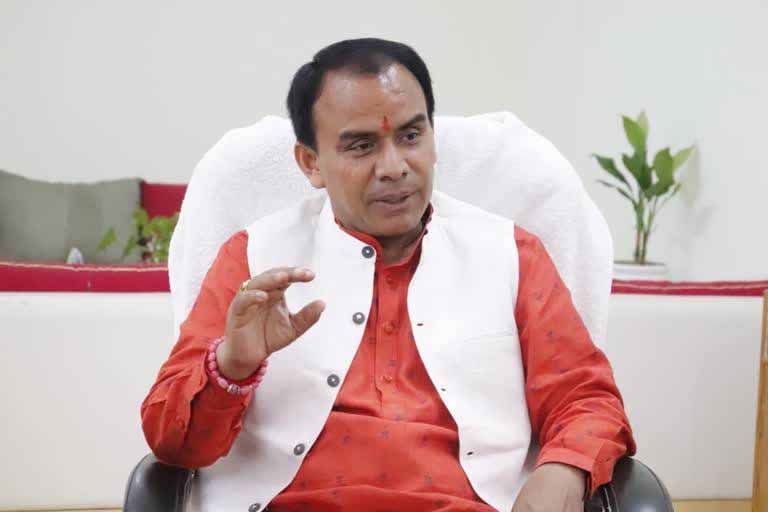
“Special emphasis is being laid on innovation to bring a new revolution in the field of education. Under this initiative, around 1,500 schools in the state will be connected to the virtual class network. All schools will be linked to the Vidya Samiksha Kendra. Special efforts are also being made to improve GER and PGI rankings,” stated Dr Dhan Singh Rawat, School Education Minister, Uttarakhand.
About The Author