
my uttarakhand news Bureau
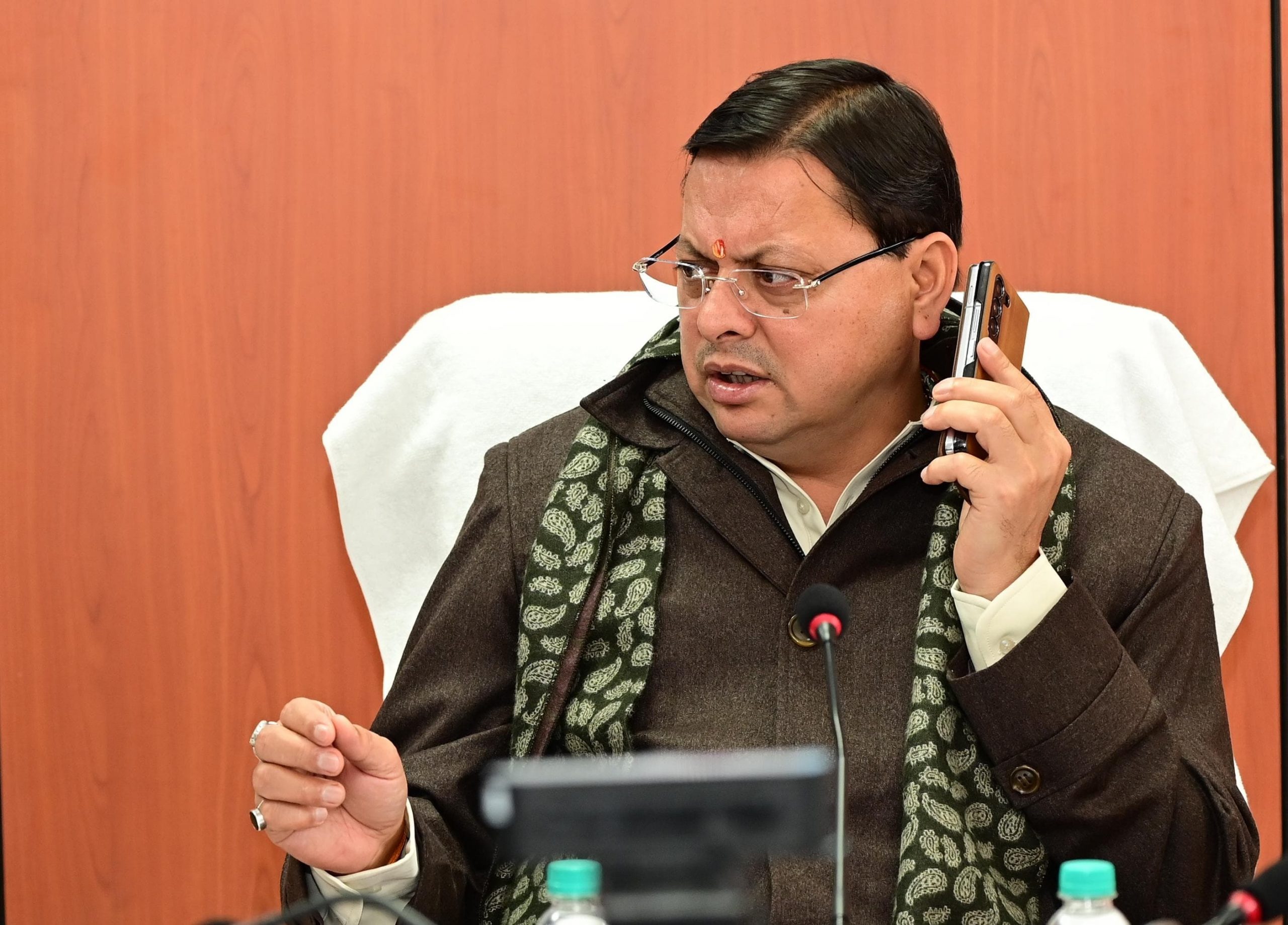
Dehradun, 6 Jan: Chief Minister Pushkar Singh Dhami today addressed a press conference in which he described the Viksit Bharat–Guarantee for Employment and Livelihood Mission Rural, popularly known as the VB–G RAM G Act, as a historic reform, asserting that it is not merely a change in the name of MGNREGA but a structural reorganisation of the rural employment policy aimed at strengthening rural areas and grassroots institutions.
Interacting with the media at the Secretariat Media Centre, the Chief Minister said the new legislation would play a decisive role in transforming villages, providing security to farmers, employment to workers, dignity to women and a strong foundation for a developed India through developed villages.
Dhami said that under the VB–G RAM G Act, rural families will now have a legal right to 125 days of employment instead of the earlier 100 days, marking an increase of 25 per cent. He said the Act makes it mandatory to provide unemployment allowance if work is not allotted within 15 days and also fixes accountability of the officers concerned. He stated that wage payments under the scheme will be made on a weekly basis and that there is a clear provision for compensation in case of any delay in payments.
The CM asserted that technology-driven transparency has been ensured in all works undertaken under the VB–G RAM G Act. He said the Act mandates the use of biometric attendance, geo-tagging and GIS mapping, mobile applications and public dashboards, artificial intelligence-based fraud detection and compulsory social audits twice every year. He added that the extensive use of these technologies will make the employment guarantee scheme corruption-free and fully transparent.
Highlighting protection of farmers’ interests, Dhami said that under the Act, work can be legally suspended for up to 60 days during sowing and harvesting seasons. This provision, he said, will ensure that farmers do not face a shortage of agricultural labour during critical periods, prevent an increase in farming costs and help maintain balance in the rural economy.
Dhami said that the VB–G RAM G Act empowers Gram Panchayats and Gram Sabhas in a real sense. He emphasised that development works will not be imposed from above, and that the identification and prioritisation of works will be decided by the Gram Sabha itself. He said that at least 50 per cent of the works under the scheme will be executed directly at the Gram Panchayat level, and that activities such as job card issuance, registration and scheme planning will be finalised locally by the Gram Sabha.
The CM said that special emphasis has been laid on the quality and the utility of works under the Act. He stated that works related to water conservation, rural infrastructure, livelihood assets and disaster management will be undertaken, including construction of ponds, check dams, stop dams, roads, drains, schools, hospitals, self-help group sheds, skill centres, rural haats, retaining walls, drainage systems and pitching works. He said these initiatives would not only generate employment but also significantly strengthen villages.
Dhami said that women empowerment has been given special focus under the VB–G RAM G Act. He said skill centres, sheds and rural haats will be developed for women associated with self-help groups, enabling them to find employment opportunities within their own villages and enhancing their economic independence.
He further said that the administrative framework under the Act has been strengthened. Describing Gram Rozgar Sahayaks, field assistants and technical assistants as the backbone of the scheme, the CM said the administrative expenditure for their training, honorarium and monitoring has been increased from 6 percent to 9 percent. He said this enhancement will improve the quality of work, ensure timely payments and strengthen supervision and monitoring mechanisms.
Dhami said that fair and balanced financial management has also been ensured under the VB–G RAM G Act. He explained that the cost-sharing ratio has been fixed at 60:40 for general states and 90:10 for Himalayan and North-Eastern states. He added that the Act provides for a clearly defined annual budget, removing the uncertainty that existed earlier. He said that for a Himalayan state like Uttarakhand, the Centre will bear 90 per cent of the financial burden, which will prevent any additional load on the state exchequer and accelerate rural development.
Dhami said that the VB–G RAM G Act is of immense importance for Uttarakhand, particularly as a mountainous and disaster-prone state. He said the Act will play a vital role in water conservation, disaster management and rural infrastructure, while making villages self-reliant and secure and further strengthening Gram Sabhas.
Citing an analysis conducted by the State Bank of India, Dhami said the Act is expected to generate a net benefit of around Rs 17,000 crore for states. He said the scheme is not anti-poor but instead strikes at the root causes of poverty by ensuring more days of employment, timely wage payments, clearly defined legal accountability and technology-based transparency for workers.
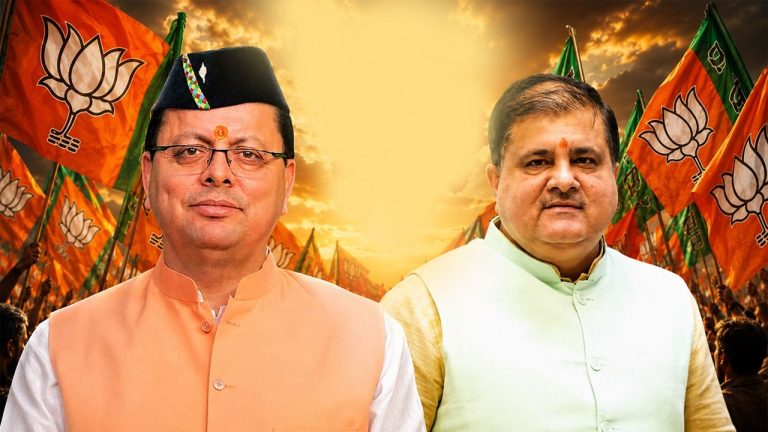
During the press conference, Rajya Sabha MP Mahendra Bhatt and MLA Dileep Rawat were also present.
About The Author