
my uttarakhand news Bureau
Srinagar (Garhwal), 20 Jan: Hemwati Nandan Bahuguna Garhwal University, Srinagar (Garhwal), has launched a special public awareness campaign to inform students across the state about the Common University Entrance Test (CUET) for admissions. Under the guidance of the Dean, Student Welfare, Prof OP Gusain, four teams of faculty members from Garhwal University will visit various remote government and private intermediate colleges in the districts of Rudraprayag and Chamoli in the Garhwal Division from 20 to 24 January. During these visits, students of Class 12 will be provided detailed information related to CUET.
In the same context, today, at the university level, information regarding CUET (UG) 2026 for undergraduate admissions in the academic session 2026–27 was shared with the principals of intermediate colleges under the development blocks of Khirsu and Kirtinagar.
Prof OP Gusain stated that the Common University Entrance Test (CUET) 2026, initiated by the Ministry of Education, Government of India, aims to ensure transparency, equity, and uniformity in higher education. Through CUET 2026, admissions to undergraduate programmes in central, state, private, and deemed universities across the country will be conducted. This examination is being organised by the National Testing Agency (NTA).
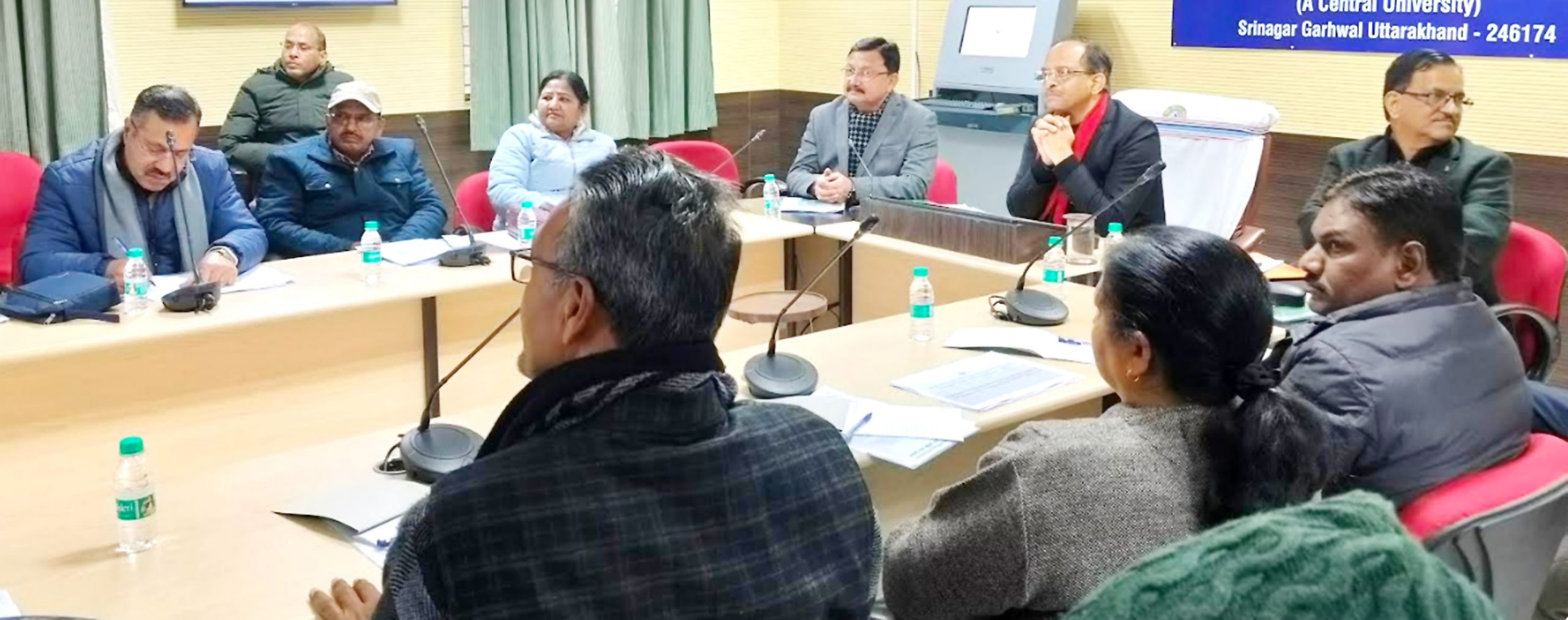
All teachers and principals were informed that CUET-UG 2026 will be conducted by the National Testing Agency. Students can apply online by logging in to the official NTA website from 3 January to 30 January 2026. The examination will be computer-based. Detailed discussions were held regarding subject-wise mapping for various courses, which the university has already prepared in advance. Addressing the meeting, Vice-Chancellor Prof Shri Prakash Singh provided comprehensive information to all principals about the nuances of CUET and also shared details of the various academic programs being run at the university.
The Vice-Chancellor further informed them that when a candidate applies for CUET, they also receive information about several universities along with Hemwati Nandan Bahuguna Garhwal University. If the candidate qualifies in the CUET examination, they may apply for admission to any central university in India based on their family circumstances and choice of subject. Through CUET-UG, students will now be relieved from appearing in separate entrance examinations conducted by different universities. Students who have passed Class 12 will be selected for admission to various undergraduate programmes such as B.A., B.Sc., B.Com., etc., on the basis of a single national-level examination.
The application process for CUET-UG is completely online and can be completed through the official NTA website. Students will select examination subjects based on their Class 12 subjects. The exam will be computer-based and conducted at various examination centres across the country. In Uttarakhand, examination centres have been designated in cities such as Dehradun, Almora, Haldwani, Nainital, and Pauri Garhwal. Based on CUET scores, universities will release merit lists, after which admissions will be conducted through a counselling process.
For this purpose, it is essential that candidates obtain prior information regarding the selection of subjects while keeping their future prospects in mind, which can be facilitated through all stakeholders present. The university’s objective is to make all students aware of the process and provide them with necessary support during admissions.
Dr Pritam Singh Negi, Coordinator, Samarth Portal, stated that for admission to all campuses and affiliated colleges of the university, it is mandatory for students to select the correct subjects in CUET-UG. Additionally, students must register on the Samarth portal and carefully study the subject mapping and eligibility criteria issued by the university. Through CUET-UG 2026, students of the region will gain new opportunities for quality higher education at Hemwati Nandan Bahuguna Garhwal University.
Prof Prashant Kandari, Coordinator, National Education Policy (NEP) 2020, stated that under NEP 2020, new model pathways in higher education have been defined to make post–Class 12 education more flexible, multidisciplinary, and skill-based. These provisions aim to provide students with diverse educational pathways aligned with their interests, abilities, and career goals. Under the new system, education at undergraduate, postgraduate, and research levels has been divided into multiple stages. Along with the traditional system, separate academic pathways have been defined for Honours, Honours with Research, and technical programmes.
Under the National Education Policy, four major academic pathways have been identified. In the traditional pathway, the structure is 3 years undergraduate + 2 years postgraduate + Ph.D. For technical programmes, the pathway is 4 years undergraduate + 2 years postgraduate + Ph.D. Additionally, students will have options such as 4 years undergraduate (Honors) + 1 year postgraduate + Ph.D., and 4 years undergraduate (Honours with Research) followed directly by Ph.D. after 1 year of postgraduate study. Under the National Higher Education Qualification Framework, education has been divided into multiple levels. After completing one year, students will receive a UG Certificate; after two years, a UG Diploma; after three years, a Bachelor’s Degree; and after four years, a Bachelor’s Degree with Honours or Honours with Research. This may be followed by a one-year postgraduate diploma, a one- to two-year postgraduate programme, and a doctoral (Ph.D.) programme of a minimum of three years. With the implementation of the multiple entry and multiple exit system, students will be able to pause or resume their education at any stage, which is expected to reduce dropout rates and promote skill-based education.
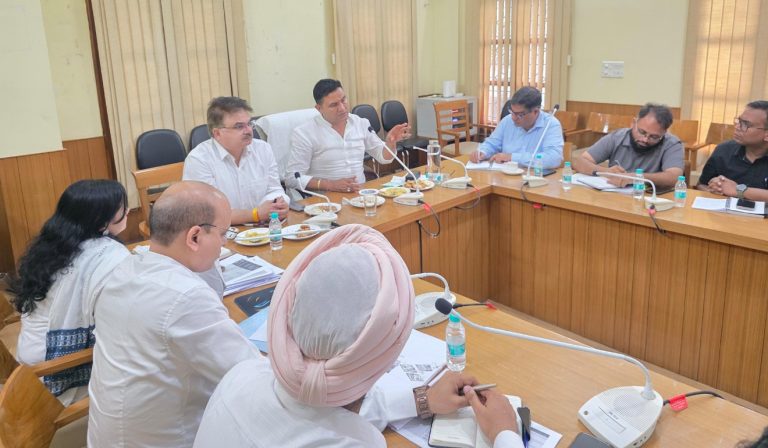
The meeting was attended by principals from approximately 40 intermediate colleges under the Khirsu and Kirtinagar development blocks. Present at the meeting were Prof OP Gusain (Dean, Student Welfare); Prof NS Panwar (Finance Officer); Prof MM Semwal (Chief Student Advisor); Prof MS Panwar (Dean, Appointment and Promotion); Prof Prashant Kandari (Dean, Academic Affairs); Dr Pritam Singh Negi (Coordinator, Samarth ERP Portal); Dr Vijaykant Purohit (Director, HIPREC); Ashutosh Bahuguna (Public Relations Officer); Surya Prakash Singh Badal (Assistant Registrar, Vice-Chancellor’s Secretariat), and others.
The teams constituted for the CUET awareness campaign include Dr Surendra Singh Bisht, Dr Gambhir Singh Kathait, Dr Varun Barthwal, Dr Kapil Panwar, Dr Anup Semwal, and Dr Bal Krishna Badhani, among others.
About The Author