
my uttarakhand news Bureau
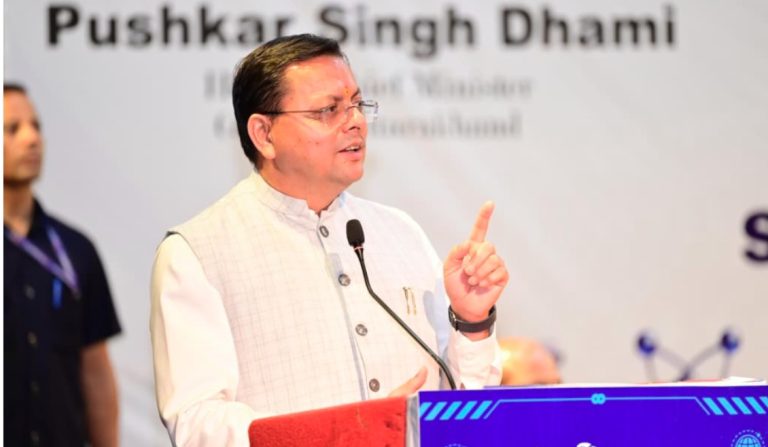
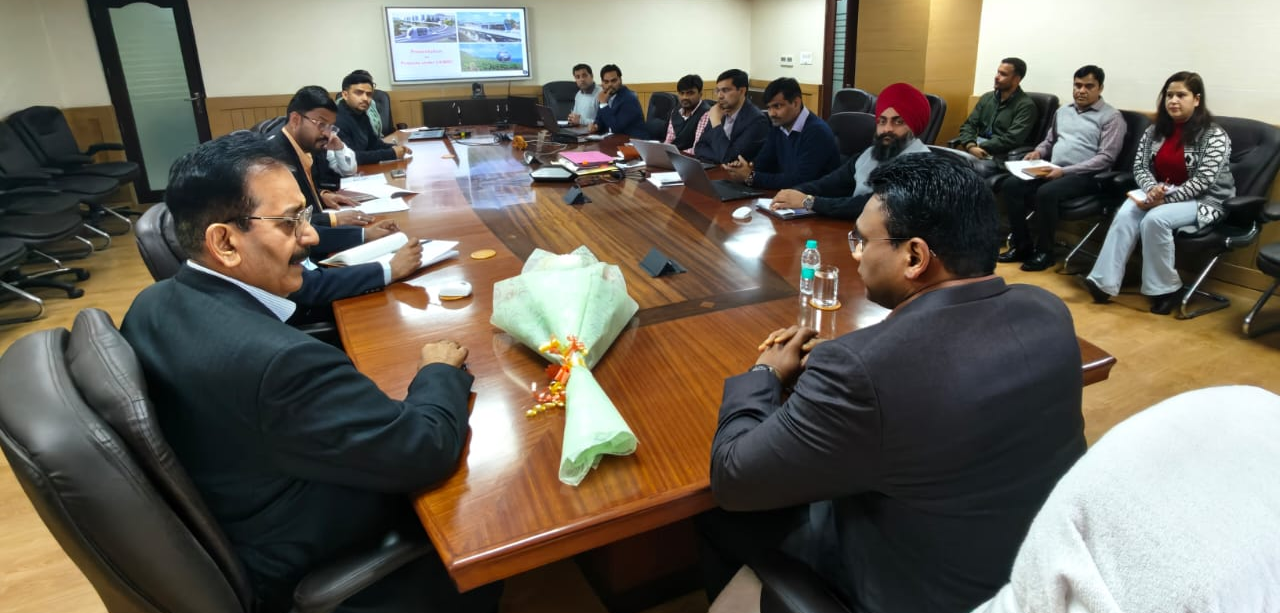
Dehradun, 17 Feb: Uttarakhand Government has claimed that, in line with the directions of Chief Minister Pushkar Singh Dhami, a major push has been initiated to modernise, streamline and make the State’s urban transport system environmentally sustainable. A comprehensive review meeting of various Uttarakhand E-BRTS projects was convened under the chairmanship of Housing Secretary Dr R Rajesh Kumar, here, today. During the meeting, detailed deliberations were held on long-pending and ambitious transit projects in Dehradun, Haridwar and Rishikesh. Managing Director of Uttarakhand Metro Rail Corporation, Brijesh Kumar Mishra, and senior officials of the Corporation participated in the meeting and presented updated progress reports on the proposed schemes. The Secretary made it clear that the State Government is committed to developing an urban transport system aligned with future requirements.
During the meeting, it was disclosed that the proposed ropeway project from Triveni Ghat to Neelkanth Temple has received the required no-objection certificates (NOCs) and approvals. An application for Stage-I forest clearance has also been submitted by the Corporation. The project is expected to significantly enhance convenience for pilgrims while reducing traffic pressure on the hill route to Neelkanth from Rishikesh. The Secretary directed that possibilities of extending the 30-year concession period in future projects be examined so as to attract private investment and strengthen financial viability.
Regarding Haridwar, deliberations were held on the proposed Integrated Ropeway Project connecting DDU Parking, Chandi Devi, Mansa Devi and a proposed multimodal hub. A request was placed for undertaking the Detailed Feasibility Consultancy (DFC), and 18 February 2026 was fixed for initiating the DFC process. The Secretary directed that the feasibility report be vetted through the PPP cell to ensure financial and technical robustness. Under the proposed PRT system in Haridwar, four corridors have been identified, namely Sitapur to Bharat Mata Mandir, City Hospital to Daksh Mandir, Laltara Chowk to Bhupatwala, and Ganeshpuram to DAV Public School. The project envisages 21 stations over a total length of 20.73 kilometres and is expected to bring transformative change to traffic management, especially during the pilgrimage season.
In Dehradun, the proposed E-BRTS project comprises two corridors, the first stretching from ISBT to Raipur with 35 proposed stations over a total length of 31.52 kilometres. Following the meeting, the Secretary conducted a joint site inspection of the first corridor along with Corporation officials. He emphasised that, in view of the capital’s rapidly increasing population and traffic load, this project must be accorded priority. Experts believe the corridor will cover major arterial routes of the city and provide a new direction to public transportation.
The PRT project in Dehradun consists of three principal corridors, namely Clement Town to Ballupur Chowk, Panditwadi to Railway Station, and Gandhi Park to ISBT Park. The Corporation has requested approval to proceed as per the Detailed Project Reports prepared for these corridors. Dr Rajesh Kumar directed that the project be integrated with the Transit Oriented Development model to ensure planned and sustainable urban expansion.
A joint site inspection of 17 stations along the ISBT to Mussoorie Diversion stretch was also undertaken. Detailed information regarding the proposed ISBT station was presented, indicating that 0.64 hectares of land would be required for construction. The land falls under the jurisdiction of the Mussoorie Dehradun Development Authority (MDDA). The Managing Director requested that necessary action be taken to transfer relevant government land to the Corporation at the earliest so that construction may commence within the stipulated timeframe.
The Secretary also directed the officials to undertake a thorough study of the Uttarakhand Car Parking Policy-2022 and ensure its integration with all forthcoming urban transport projects, observing that without effective parking management, no transit system can function efficiently. He stated that the Triveni-Neelkanth ropeway and Haridwar ropeway projects are at an advanced stage and must be implemented on priority. The review meeting was attended by Managing Director Brijesh Kumar Mishra, Director (Finance) Sanjeev Mehta, General Manager (Civil) Sanjay G Pathak, Joint General Manager (HR) Krishna Nand Sharma, Joint General Manager (S&T) Ajay Babu, Joint General Manager (Electrical) Saurabh Shekhar, Joint General Manager (Civil) Jayanandan Sinha, Deputy General Manager (Civil) Gurulal Singh, Section Engineer Sarvesh Kumar and Section Engineer Ashok Dobhal.
The meeting chaired by Dr R Rajesh Kumar signalled the government’s readiness for a new phase in urban mobility. A strategy is being evolved to advance E-BRTS, PRT and ropeway projects in an integrated manner. If implemented within stipulated timelines, these projects are expected to significantly improve traffic management, tourism and economic activity in Dehradun, Haridwar and Rishikesh.
Dr Kumar stated that the state government, in accordance with the vision of CM Dhami, remains committed to connecting Uttarakhand with a modern, safe and sustainable urban transport system. He observed that rapidly developing cities such as Dehradun and Haridwar urgently require integrated transit solutions. Ropeway, PRT and E-BRTS systems will not only ease traffic congestion but also contribute to environmental conservation and tourism promotion. He directed that all projects be pursued with quality, transparency and adherence to timelines, with special emphasis on attracting private investment, strengthening the PPP model and ensuring technical feasibility. The Government aims to develop a robust modern public transport network in the State’s major cities in the coming years, he claimed.
About The Author