
RSS Chief addresses ex-servicemen in Doon
my uttarakhand news Bureau
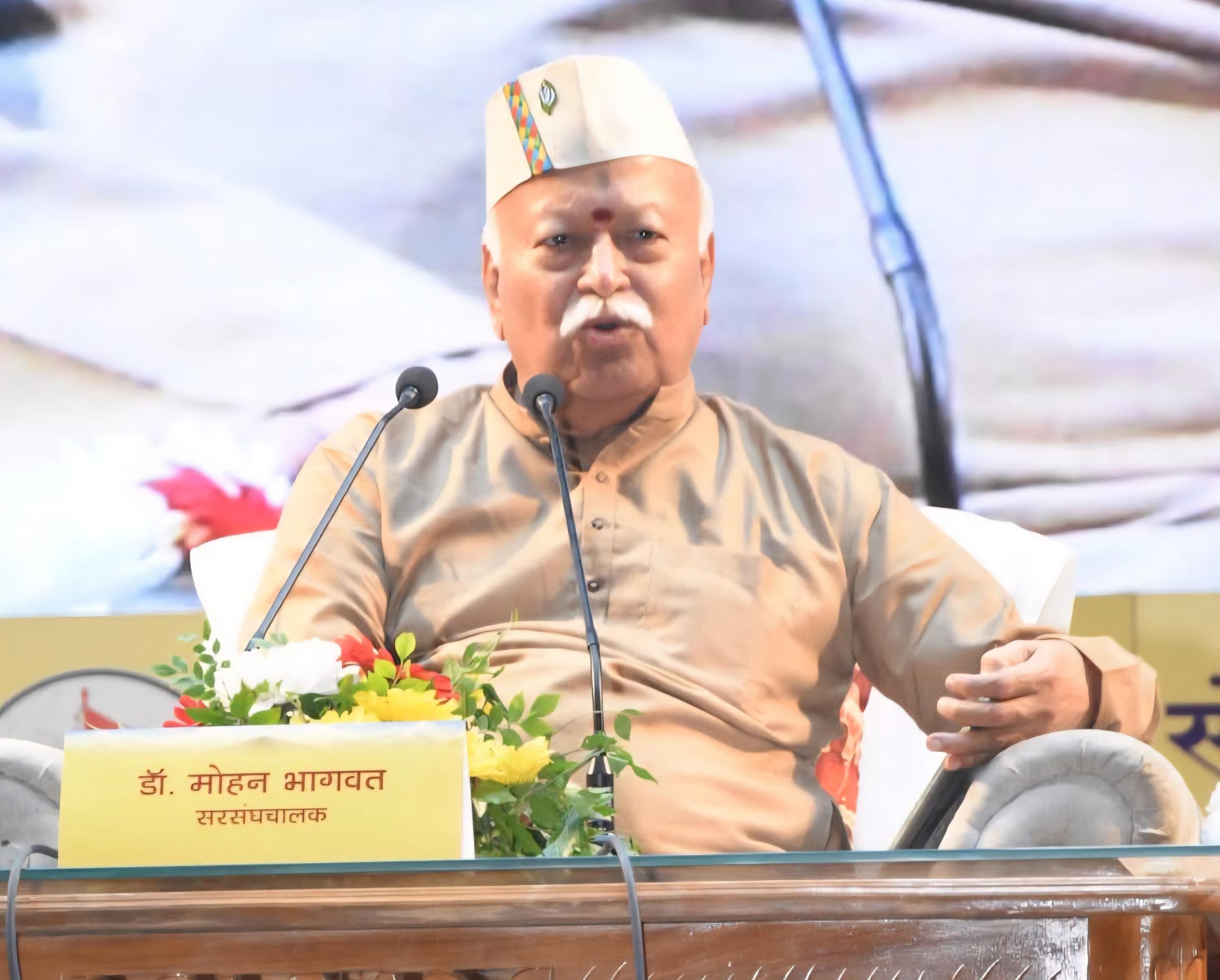
Dehradun, 23 Feb: On the second day of his Uttarakhand visit, Rashtriya Swayamsevak Sangh (RSS) Sarsanghchalak Mohan Bhagwat participated in a major public meeting and interactive dialogue with ex-servicemen and retired army officers at the Himalayan Cultural Centre in Gari Cantt, Nimbuwala. The programme began with Maj Gen (Retd) Gulab Singh Rawat, Col (Retd) Ajay Kothiyal, and Col (Retd) Mayank Chaube honouring Bhagwat with shawls and traditional caps. Six retired generals, a vice admiral, the DG Coast Guard, brigadiers, and over 50 retired colonels participated, alongside hundreds of ex-servicemen from captain and havildar ranks who attended enthusiastically in their military uniforms.
Rajesh Sethi conducted the proceedings from the dais. In his keynote address, Bhagwat emphasised that society plays a central role in shaping the nation‘s destiny. He asserted that a strong society ensures robust national defence. He added that organised societal strength empowers every citizen, making character and discipline in societal leadership imperative. Recalling the 1857 First War of Independence and later revolutionary movements, he noted that the flame of freedom has never extinguished. He said learning from history marks mature national consciousness. Paying tribute to RSS founder Keshav Baliram Hedgewar, Bhagwat described him as a born patriot who played a fearless role in the freedom struggle and was associated with fighters like Madan Mohan Malaviya. He clarified that the Sangh’s sole aim is character-building, not electoral politics, as strong individuals build a strong nation; the organisation rose without external aid, enduring two bans through societal inner strength.
In a special question-answer session, ex-servicemen raised key issues on national security, social harmony, youth, and policy matters. On national security and the Agniveer scheme, he said excellent leadership and military preparedness are always essential, describing Agniveer as an experiment open to refinement based on the experience. Addressing queries on Nepal, Bangladesh, Kashmir, and neighbours, he observed that these were historically part of the same cultural geography, with Kashmir being an integral part of India but that requires vigilant and firm policy against adversarial campaigns. On Hindu identity and social harmony, he explained that the Indian worldview embraces all living beings, rooted in ‘Vasudhaiva Kutumbakam’; religion defines humanity and society, and Hindu thought is inclusive, allowing anyone to join without conversion, while public resources like temples, water sources, and cremation grounds should remain equally accessible to all Hindus.
Responding to ideological bitterness on social media, Bhagwat advocated reviving traditions of scriptural debate and meaningful dialogue over acrimony, stressing ground-level direct interactions for effective policies. On the issue of corruption and character-building, he called it a problem of intent, not just systems, urging inculcation of values in children, savings from earnings, and distribution for society as the true foundation of nation–building, with joy in selfless service marking a healthy society. On the issues related to the youth, migration, and local development, Bhagwat mentioned vast potential in education, health, and local entrepreneurship and called for planned efforts to curb migration in hilly regions like Garhwal. He described the Uniform Civil Code (UCC) as vital for national integration to reduce social disputes, advocated patience and broad consensus on the reservations and on population imbalance, identified conversion, infiltration, and birth rates as causes demanding comprehensive, farsighted policy.
Urging the ex-servicemen, Bhagwat said service and struggle are needed within society just as soldiers defend borders, inviting them to join over 1.3 lakh Sangh service projects nationwide, terming their participation in the centenary year invaluable.
About The Author