my uttarakhand news Bureau
Dehradun, 17 Nov: A long-term development roadmap has been prepared for Uttarakhand up to the year 2050 with the objective of transforming the State into an ideal Himalayan state under the ‘Viksit Uttarakhand’ vision. The blueprint outlines ambitious targets across key sectors, ranging from economic growth and employment generation to infrastructure expansion, environmental conservation and technology-driven governance. The year 2050 will also mark the golden jubilee of Uttarakhand’s formation.
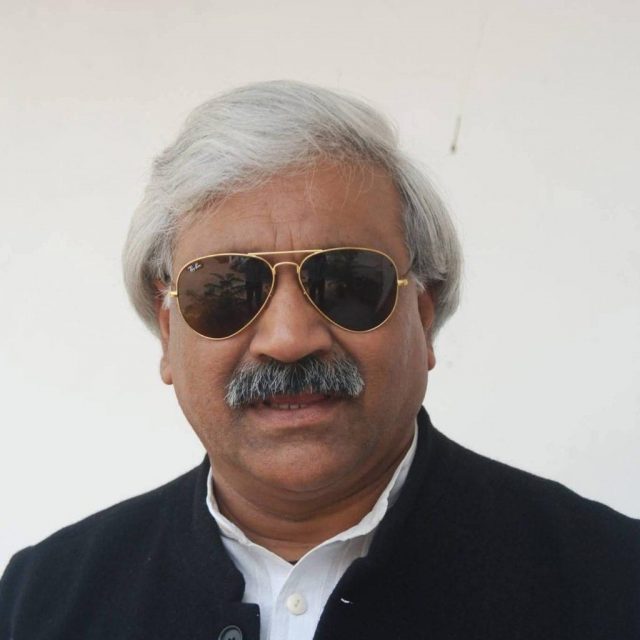
In a statement issued today, Chief Minister’s Advisor on SETU Aayog Infrastructure Development and former minister Dinesh Agarwal said that the vision document has been prepared under the leadership and guidance of CM Pushkar Singh Dhami with a focus on ensuring balanced and comprehensive development across the State. He said six major sectors have been identified as priority areas, namely economy and employment, social development, forests and environment, infrastructure development, empowerment of local bodies and technology-based good governance. Detailed action plans and a long-term roadmap have been formulated to achieve the targets set under these sectors.
Agarwal further stated that as per the vision document, the State’s Gross State Domestic Product (GSDP) is targeted to increase from the present Rs 3.48 lakh crores to Rs 28.48 lakh crores by 2050. Per capita income is projected to rise from Rs 2.94 lakhs to Rs 20.4 lakhs during the same period. The roadmap also envisages the creation of nearly 22.11 lakh employment and self-employment opportunities through the Micro, Small and Medium Enterprises (MSME) sector. In the tourism sector, the State aims to increase the overall number of tourists by 2.5 times while targeting a tenfold increase in international tourist arrivals.
He also claimed that the vision places significant emphasis on human development indicators as well. In the education sector, the target is to reduce the dropout rate from primary to secondary level to zero while ensuring that 87 per cent of higher education becomes employment-oriented. Placement rates in polytechnic institutions are proposed to be increased to 90 per cent. In healthcare, 26 Ayush Excellence Centres are planned to be established across the State to strengthen traditional and integrated healthcare services.
Environmental conservation has also been given a prominent place in the roadmap. The plan envisages the revival of 10,500 water sources, 5,000 natural springs and 56 rivers across Uttarakhand. Simultaneously, substantial expansion of infrastructure has been proposed, including the development of a 55,414-kilometre road network, construction of 29 heliports and helipads and enhancement of the State’s energy generation capacity to 22,000 MW.
The vision further aims to create 4.5 lakh ‘Lakhpati Didis’, provide round-the-clock drinking water supply to urban households and transform public service delivery into a completely paperless, faceless and cashless system. Agarwal claimed that the roadmap has been designed to provide strategic direction for Uttarakhand’s development over the coming decades, with the ultimate goal of ensuring sustainable growth, enhanced livelihoods and improved quality of life for people across the State by 2050.
About The Author