
my uttarakhand news Bureau
DEHRADUN, 19 Jan: The Asian Waterbird Census (AWC) 2026 was conducted across Uttarakhand on Sunday, covering major river banks and wetlands throughout the state. As part of this initiative, the census was also carried out at wetlands and river banks within the Rajaji Tiger Reserve under the guidance of Director Dr Koko Rose.

Following standard census protocols, teams recorded 1,995 birds belonging to 100 species across three key sites: the Ganga bank of Chilla Range, the Ganga and Song River banks of Motichur Range, and Bhimgoda Barrage. Significant findings included sightings of several threatened species such as Black-necked Stork (Endangered) with juveniles, Steppe Eagle (Endangered), Egyptian Vulture (Endangered), Pallas’s Fish Eagle (Endangered), Asian Woolly-necked Stork (Near Threatened), and River Lapwing (Near Threatened). The presence of juvenile Black-necked Storks indicates suitable breeding habitat in the region.

Among the most abundant species recorded were 420 Great Cormorants, 365 Green-winged Teals, and 497 Ruddy Shelducks. Notably, Great Thick-knee and Velvet-fronted Nuthatch were recorded for the first time in these areas. Other important species observed included Bar-headed Goose, Booted Eagle, River Lapwing, and Bluethroat. A total of 17 participants, including volunteers, birders, nature guides, and forest personnel, took part in the census across the three locations.

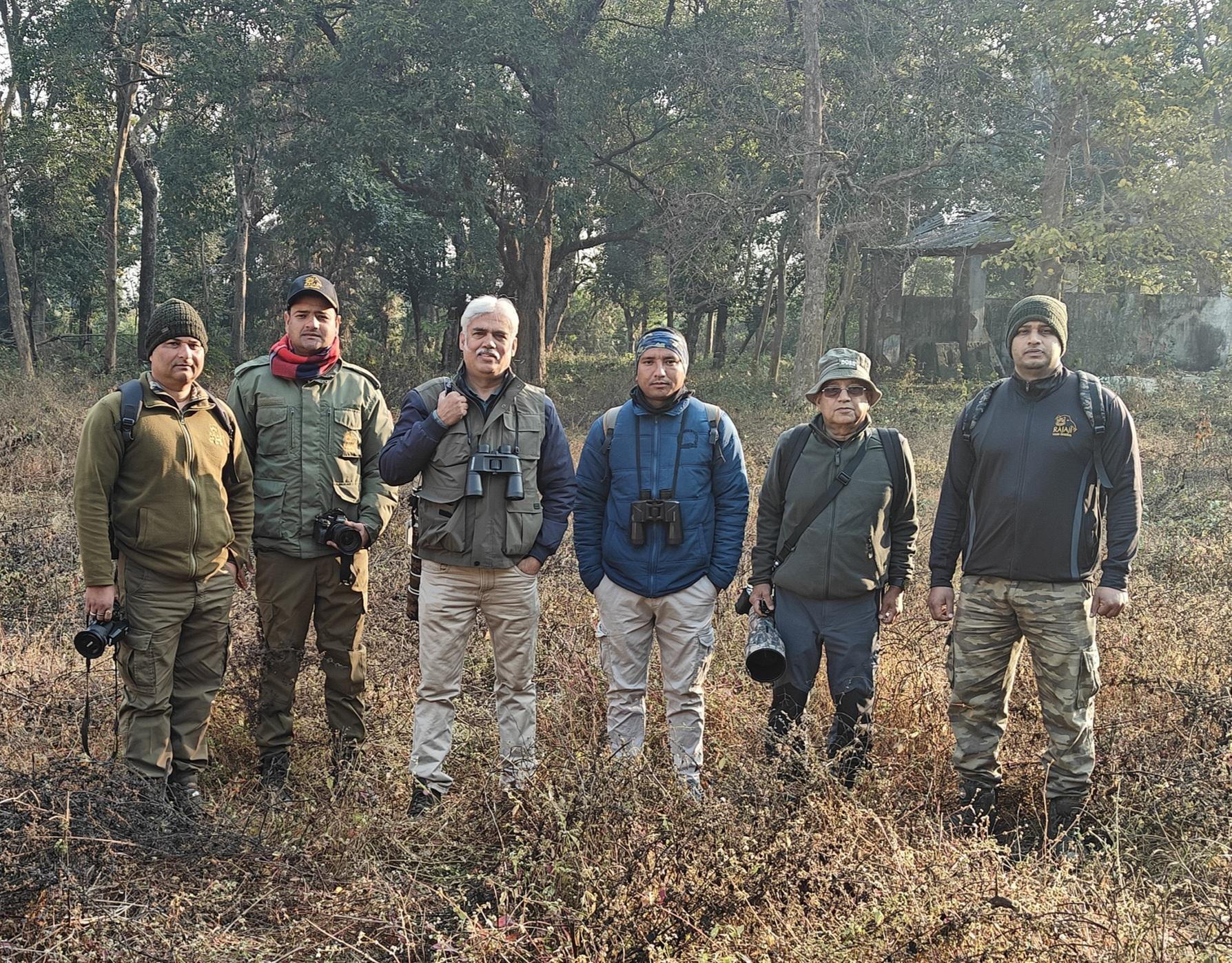
The Chilla Range survey team included ACF and Wildlife Warder Chitranjali Negi, Anurag Giri, Gautam Verma, Sagar Thakur, Arvind Singh with a team leader Veeru Negi. The Motichur Range (Ganga and Song rivers) census was led by wildlife photographer Bhumesh Bharti, along with Forester Ashish Kumar, Col Amitabh Thapliyal, Sumit Rana, Sharafat Ali, nature guide Sanju Negi, and Prashant Rawat.

The Bhimgoda Barrage and Ganga bank survey was conducted by a team led by Taukeer Alam, with Ankit, Anjum Rasheed, Mirza Galib, and Riyaz Ali, all nature guides.
The census was organised by the Uttarakhand Forest Department, Uttarakhand State Biodiversity Board, and eBird India, in collaboration with the Asian Waterbird Census and other organisations. Rajaji Tiger Reserve continues to play a crucial role in conservation by maintaining rich habitats that support both resident and migratory bird species.
Pics: Bhumesh Bharti
About The Author