my uttarakhand news Bureau
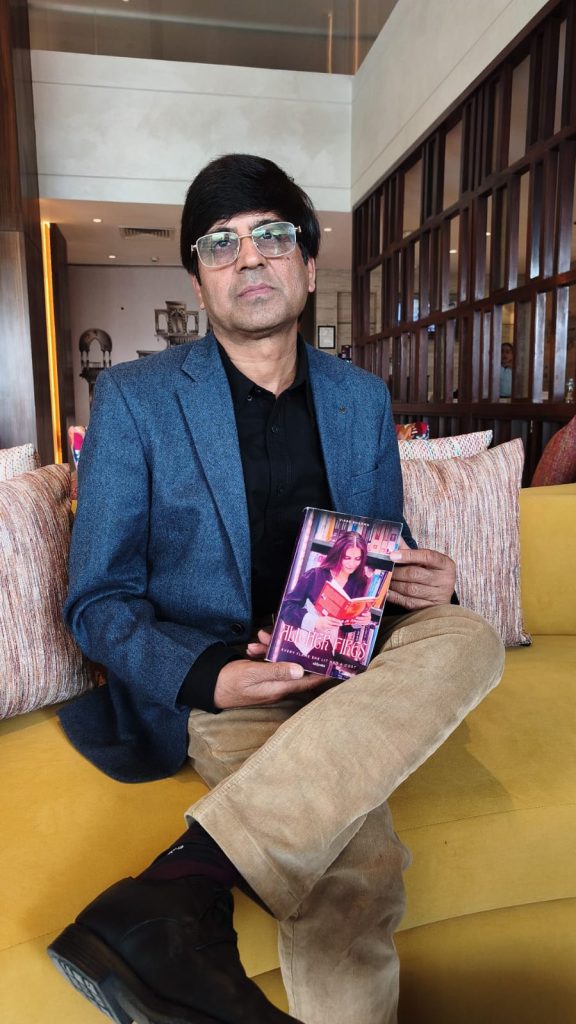
Dehradun, 19 Feb: Renowned novelist and academician Professor Vikas Sharma was in Dehradun today and, on this occasion, interacted with media persons at a local hotel. Sharma is the brother of renowned Hindi poet Kumar Vishwas. During his interaction, Sharma raised several concerns relating to higher education, institutional governance and contemporary social issues. Professor Vikas, who is currently serving as General Secretary of the All India English Teachers’ Association, spoke at length about his latest English novel, ‘All Her Fires’, which addresses themes such as widespread corruption in universities, the lifestyle and dilemmas of Gen Z, the implications of the National Education Policy (NEP) 2020, the growing influence of artificial intelligence and the sensitive issue of child abuse.
Sharing details of his literary journey, Prof Sharma stated that he has authored fifteen English novels so far. He said ‘All Her Fires’ seeks to reflect the realities prevailing within educational institutions and society at large, while also encouraging debate and introspection among readers.
He also observed that the writers and literary figures must not accept wrongdoing within the educational institutions as something normal or inevitable. Instead, he stressed that they should feel morally obliged to speak out and contribute towards corrective reform. He emphasised the need for a serious and balanced deliberation on the shortcomings in the revised National Education Policy 2020, stating that policy reforms must be implemented with due attention to ground realities.
Sharma further pointed out that professors and teachers are increasingly burdened with clerical and administrative assignments, which, in his view, distract them from their primary responsibility of teaching and mentoring students. Such trends, he said, adversely affect academic standards and the overall learning environment in universities.
Sharma also expressed concern over what he described as the growing entry of political party leaders into university campuses. He termed the development disturbing and said academic institutions should remain spaces for learning and independent thought rather than becoming arenas of political influence. He also voiced dissatisfaction with certain provisions of the UGC Regulation Act, though he did not elaborate on specific clauses.
Referring to the recent UGC regulations that have been put on hold by the Supreme Court, Prof Sharma observed that dividing society along caste lines is detrimental to harmony. He observed that in universities students often live, study and interact without caste-based differences, and therefore any regulatory or administrative measures that reinforce such divisions can create unnecessary tensions. He further stated that indiscriminate abuse or insults directed at any community are inappropriate. Referring to remarks such as “corrupt Pandit ji”, he said targeting a particular section of society is unfair and does not contribute to constructive dialogue.
He reiterated that literature and academia must remain platforms for reasoned debate, ethical reflection and the social reforms.
Author Prof Vikas Sharma calls for academic reforms, raises concerns over NEP 2020