
By Arun Pratap SinghGarhwal Post Bureau
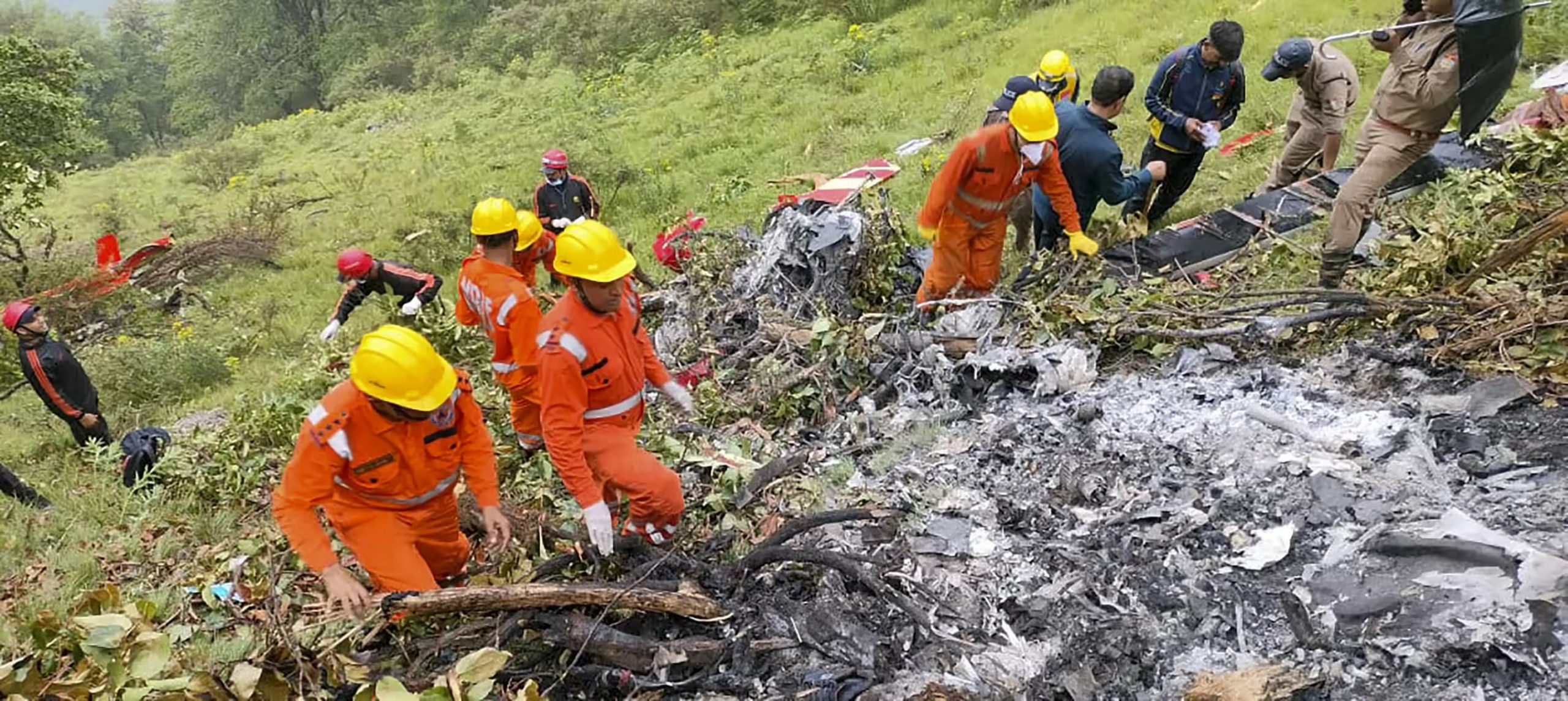
Dehradun, 28 Nov: The interim inquiry report into the Aryan Aviation Private Limited helicopter crash in the Kedarnath Valley, which killed seven people on 15 June earlier this year, is now available. The interim report paints a grim picture of rapidly deteriorating visibility, unclear adherence to safety protocols, and possible operational lapses. While the Aircraft Accident Investigation Bureau (AAIB) has not found any technical malfunction in the Bell 407 helicopter (VT-BKA) at the time of take-off, the report raises troubling questions about weather assessment, slot timing, and the adequacy of aviation infrastructure in one of India’s most challenging flying zones.
It may be recalled that the helicopter, which had taken off from the Kedarnath helipad and was en route to Guptkashi, had crashed near Gaurikund at 5.35 a.m. and was subsequently gutted by fire. The pilot’s last recorded words, “Cannot see anything, turning…”, were transmitted on Radio Telephony to the operations team of another helicopter as he approached the exit point of the valley. No further communication or distress call followed.
The ill-fated chopper was being piloted by Capt Rajveer Singh Chauhan who was among the seven who lost their lives on the occasion.
According to CCTV footage analysed by the investigators, the valley’s exit route was heavily packed by clouds that were moving downwards, severely restricting visibility at the time of the accident. Two helicopters trailing VT-BKA managed to escape by descending to a lower altitude to avoid the cloud formation, indicating rapid and localised weather deterioration that may have trapped the ill-fated aircraft. The AAIB noted that the pilot of VT-BKA was maintaining the mandated altitude of 9,000 feet while exiting the valley, in keeping with Standard Operating Procedures, and that no abnormality was observed during take-off or the helicopter’s entry into the valley.
The interim findings have intensified scrutiny of pre-flight decision-making. An FIR filed against Aryan Aviation officials alleges that the helicopter operated before its allotted time slot of 6 a.m. to 7 a.m., raising concerns over whether adequate weather checks were conducted despite clearly cloudy and foggy conditions. The complaint further states that this amounted to a violation of protocols of the Directorate General of Civil Aviation (DGCA) and the Uttarakhand Civil Aviation Development Authority (UCADA), both of which mandate strict adherence to meteorological evaluation in high-altitude sectors where conditions can change within minutes. However, while the protocols do exist, both these agencies obviously failed to get them implemented, this also raising questions on their own effectiveness or seriousness.
Technical experts from Bell Helicopters examined the wreckage in Dehradun and noted that most damage appeared consequential to the severe impact with mountainous terrain. The interim report, while not apportioning blame to any particular agency or the operators, does underline an urgent need for robust safety enhancements in high-altitude helicopter operations. Kedarnath and similar pilgrimage routes witness extremely unpredictable weather, narrow valleys, heavy congestion of flights during peak season and limited Air Traffic Control surveillance, all of which raise systemic concerns. The report’s findings revive the long-standing demand for better ATC coverage, real-time weather monitoring systems, stricter slot regulation, and improved coordination mechanisms to reduce risks in densely operated mountainous corridors.
The circumstances have raised the uncomfortable question of whether commercial pressures overshadowed safety considerations, and whether regulators, despite being fully aware of seasonal risks and past incidents, have been lax in enforcing compliance.
As the AAIB prepares its final report, the emerging details compel a deeper examination of operational discipline, regulatory oversight and infrastructure gaps. In a region where a sudden sweep of clouds can turn a routine sortie into a fatal encounter, the Kedarnath crash serves as a stark reminder that high-altitude aviation needs stronger safeguards before the next flying season begins.
About The Author