
By Arun Pratap Singh
my uttarakhand news Bureau
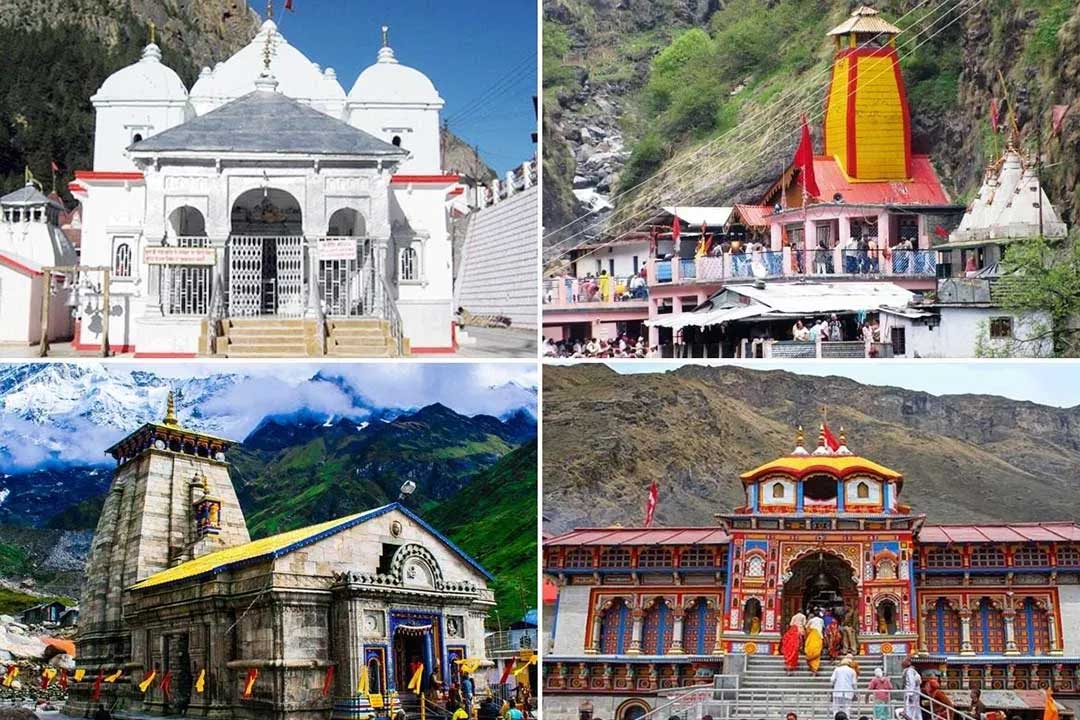
DEHRADUN, 11 Mar: Entry of non–Hindus has been barred in 47 temples of Uttarakhand, including the revered shrines of Badrinath and Kedarnath, following a significant decision taken by the Badrinath-Kedarnath Temple Committee (BKTC). The proposal was approved during the committee’s budget meeting ahead of the Char Dham Yatra 2026. The Char Dham Yatra is scheduled to begin on April 19 with the opening of the portals of Gangotri and Yamunotri temples.
It may also be recalled that the State government has already taken the decision to impose restrictions on the use of mobile phones in the Char Dham temples. Now, the Badrinath-Kedarnath Temple Committee has taken an important decision to prohibit the entry of non–Hindus in the temple premises. Under the decision, non–Hindus will not be allowed to enter the temple premises of Kedarnath and Badrinath during the upcoming Char Dham Yatra. The committee has also imposed a similar restriction on 45 other temples that fall under its administration. It may also be clarified that according to BKTC, there will be no bar on entry of Sikhs, Buddhists and the Jains in the temples as they are considered to be part of Sanatan traditions.
The decision comes in the backdrop of a demand raised earlier this year by the Ganga Sabha in Haridwar seeking a ban on the entry of non–Hindus at Har Ki Pauri. In January, the organisation had even put up signboards at several places declaring the area as one where entry of non–Hindus was prohibited. The issue had subsequently sparked widespread debate as millions of devotees visit Haridwar every year to take a holy dip at Har Ki Pauri. After the demand for restricting entry of non–Hindus at Har Ki Pauri gained attention, similar demands began to be raised for the Char Dham temples as well. At that time, BKTC Chairman Hemant Dwivedi had stated that the proposal to prohibit entry of non–Hindus in temples under the committee’s jurisdiction would be placed in the upcoming board meeting.
While the Uttarakhand Assembly’s budget session is currently underway at the Bhararisain Assembly complex in Gairsain, the BKTC convened its own budget meeting at its camp office in Dehradun yesterday. The meeting, chaired by Hemant Dwivedi, approved a budget of Rs 121.7 crore for the financial year 2026-27. Along with the budget, the most significant proposal that had drawn attention across the country was also passed. During the meeting, a resolution was placed to prohibit the entry of non-Sanatan followers in 47 temples of Uttarakhand that come under the BKTC, including Badrinath and Kedarnath. The proposal received unanimous approval and was subsequently passed.
Earlier, when the demand to restrict entry of non–Hindus at religious sites in Uttarakhand had been gaining momentum, leaders and organisations from different communities had expressed mixed reactions. Congress leaders and several organisations had raised questions over the demand. AIMIM president Asaduddin Owaisi, while addressing a press conference in Delhi, had said that putting up posters banning the entry of non–Hindus in Haridwar was akin to making a mockery of the Constitution. He had termed the move as discriminatory and said it violated the right to equality. Jamiat Ulema-e-Hind president Arshad Madani had also stated that such restrictions could increase divisions in society and were against India’s shared cultural traditions and mutual respect. The issue had triggered a nationwide debate and political reactions at the time.
At the same time, Chief Imam of the All India Imam Organisation, Imam Umar Ahmed Ilyasi, had expressed support for the proposal to restrict entry of non–Hindus in temples. He had said that it was essentially a matter of religion and that each religion has its own sanctity and rules. According to him, if a temple committee decides that non–Hindus should not enter a particular shrine, there should be no objection. He had pointed out that non-Muslims are not permitted in Mecca and Medina, yet this does not usually become a matter of controversy, and therefore such matters should not be politicised.
However, Chief Minister Pushkar Singh Dhami had earlier indicated that the Government would take a decision after consulting the organisations responsible for managing religious sites in the state. The Chief Minister had emphasised that religious places in Uttarakhand are managed by various religious bodies including Tirth Sabhas, Ganga Sabha, Kedarnath Sabha, the Badrinath-Kedarnath Temple Committee and members of the saint community. He had stated that since these institutions are directly responsible for managing the shrines of great historical and religious significance, the government would consider their views before taking any decision.
Although the state government has not yet taken a blanket decision regarding restriction of entry of non–Hindus in all religious places across the state, the BKTC has moved ahead with its own decision concerning temples under its jurisdiction. With the Char Dham Yatra set to begin on April 19, the committee has formally passed the proposal during its budget meeting. As a result, non–Hindus will not be permitted to enter the temple premises and sanctum areas of the 47 temples administered by the BKTC during the upcoming pilgrimage season.
BKTC Chairman Hemant Dwivedi said that those who believe in Hindutva and Sanatan Dharma and have faith in Baba Kedarnath and Badri Vishal are considered Hindus and followers of Sanatan tradition. He said the committee welcomes devotees who follow Sanatan Dharma but those who do not follow the tradition have been restricted from entering the temple premises. He explained that the BKTC is responsible for managing the temples and their premises, and therefore the decision has been taken to prohibit the entry of non–Hindus in the sanctum sanctorum and temple complexes of 47 temples including Kedarnath and Badrinath. He added that such a demand had been raised in the state for a long time.
Dwivedi further stated that the decision was taken to preserve the sanctity and religious purity of the shrines. He alleged that in Uttarakhand illegal mazars had been constructed at several places and that certain groups had attempted to disturb the atmosphere of the state in the name of religious activities. According to him, lakhs of devotees from across the country and abroad visit religious places in Uttarakhand every year and therefore it is essential to ensure that the sanctity and spiritual character of these pilgrimage sites are maintained so that visitors come there solely for pilgrimage.
He also asserted that the decision had been taken in accordance with constitutional provisions that allow different religious communities to manage their own religious affairs. Dwivedi said that every religion has its own traditions and practices and it is the responsibility of followers to preserve them. He emphasised that temples associated with Sanatan Dharma are an integral part of India’s spiritual identity and attract millions of devotees every year, and therefore preserving their historical and religious character is the duty of all.
Clarifying the scope of the restriction, the committee said the ban would apply specifically to the temple premises and the sanctum areas. Uttarakhand being a mountainous state, many temples are located at high altitudes where pilgrims reach with the help of services such as palanquins, porters carrying pilgrims in baskets and horses or mules. These services are often operated by people from different communities. The BKTC clarified that the new restriction will not affect their livelihood, as they will be allowed to operate up to the outer areas of the temple premises, though entry inside the temple complex will remain restricted.
The temples where the restriction has been imposed include the prominent shrines of Badrinath and Kedarnath along with Triyuginarayan Temple, Narsingh Temple, Vishwanath Temple, Omkareshwar Temple, Kalimath Temple, Brahmakapal Shila and the Badrinath Parikrama route, Tapt Kund, Shankaracharya Samadhi, Madhyamaheshwar, Tungnath, Rudranath, Kalpeshwar, Yogdhyan Badri, Bhavishya Badri, Adi Badri, Vriddha Badri, Mata Murti Temple, Vasudev Temple, Gauri Kund Temple, Adi Kedareswar Temple, the Panch Shilas of Badrinath including Narad Shila, Narsingh Shila, Varahi Shila, Garud Shila and Markandeya Shila, as well as the Panch Dharas comprising Prahlad Dhara, Kurma Dhara, Bhrigu Dhara, Urvashi Dhara and Indira Dhara. Other temples include Usha Temple in Ukhimath, Kalishila and Vasudhara.
The committee has clarified that the term non-Hindu or non-Sanatani refers to those who do not follow Sanatan Dharma. The restriction will not apply to followers of Sikhism, Jainism and Buddhism, which are considered traditions that originated from the broader Sanatan cultural stream. Members of these communities will therefore be permitted to visit the temples. The Badrinath-Kedarnath Temple Committee, commonly known as BKTC, administers Badrinath and Kedarnath along with a total of 47 temples in Uttarakhand.
About The Author