

By Vishvaney Agarwal
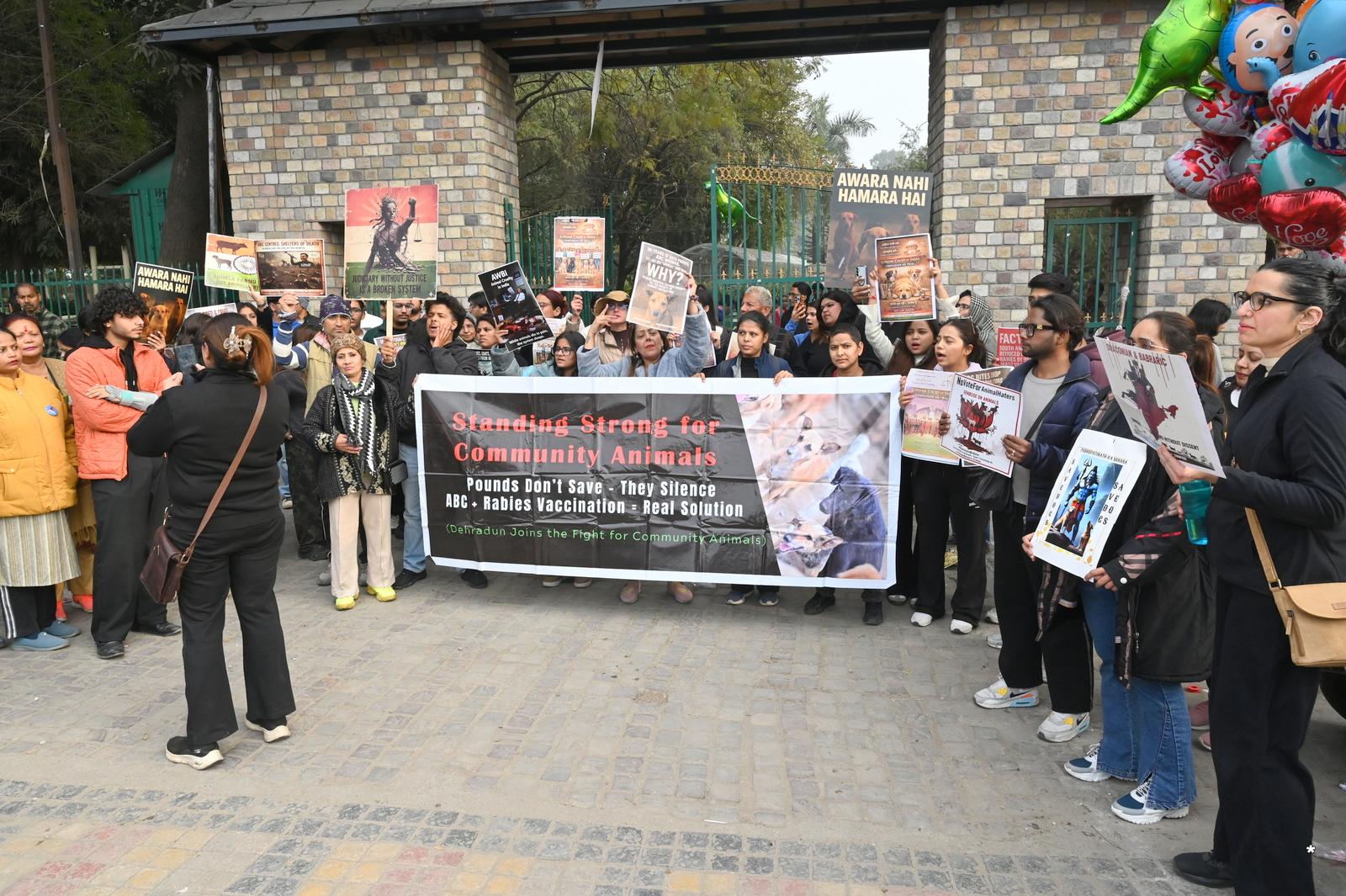
Dehradun, 4 Jan: A protest was held in Dehradun on Sunday as animal lovers and shelter workers gathered to raise concerns over the impending Supreme Court verdict on stray animals. The protest began at Bikanerwala, Bindal Bridge, where around 40 to 50 people assembled before marching nearly two kilometres to Gandhi Park. Participants included animal shelter owners, feeders, rescue workers and local residents who described themselves as long-time caregivers of community animals.


Protesters raised slogans such as “Awara nahi, humara hai, humko jaan jitna pyaara hai” and “We want justice,” while chanting continuously during the march. Several shopkeepers along the route joined in the slogans, and passers-by stopped to take photographs and videos of the demonstration.


The protest comes amid growing anxiety among animal welfare groups following directions issued by the Supreme Court in August, with a final verdict expected on 7 January. The case has been framed around concerns of public safety and municipal responsibility for managing stray animal populations. Activists fear that stricter directives on the removal of stray animals could lead to increased cruelty and unplanned relocation without adequate infrastructure. Samia Akbar, a writer and activist at the protest, said the demonstration aimed to draw attention to the lack of preparedness across Indian cities. 


“No city has the space, staff or budget to house the animals they are talking about picking up,” she said. “Right now, animals survive on the streets because private individuals and organisations vaccinate, sterilise and feed them. That responsibility has never been fully taken up by the state.” She pointed out that existing animal birth control and vaccination measures have remained incomplete, despite being mandated, questioning how authorities would prevent disease or ensure care if animals were removed from public spaces. She also raised concerns about illegal practices that have emerged in response to public fear. According to her, some people are paying to have dogs picked up and abandoned in forest areas, increasing risks to both animals and wildlife. She added that the issue extends beyond dogs, highlighting the poor condition of gaushalas and the lack of emergency veterinary services for injured cattle, especially after evening hours. Other activists echoed similar concerns, stressing that public safety and animal welfare need not be opposing goals. They argued that humane solutions such as vaccination, sterilisation and community-based care are more effective than forced removal. As the country awaits the Supreme Court’s decision, protesters said they would continue to mobilise until policies balance public safety with the protection of animals.
About The Author