
By Shruti Kotiyal & Aabshar Abbasi
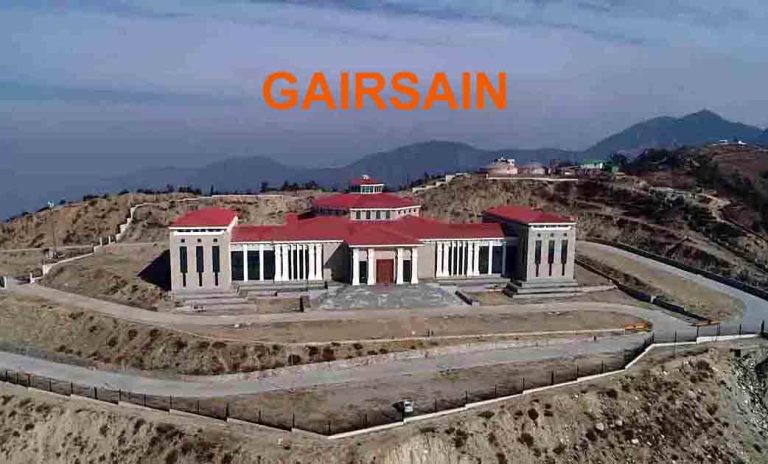
Dehradun, 2 Mar: On the final day of Vasantotsav 2026, the celebration of fragrance and flowers came to a close. Governor Lt General Gurmit Singh (Retd) honoured all the entrepreneurs and participants who showcased their art and culture at Lokbhavan with great enthusiasm.
At one corner of Vasantotsav at Lok Bhavan, the fragrance of flowers gave way to the irresistible aroma of cultural cuisine. The annual celebration at Lok Bhavan Dehradun transformed into a vibrant food corridor, where tradition met innovation and heritage grains found new expression in contemporary fast-food formats. On the third day, students of the School of Media and Communication Studies (SoMCS), Doon University, explored the cultural identity of food—its relevance, uniqueness and evolving role in shaping Uttarakhand’s modern culinary narrative.

This year’s culinary showcase highlighted an emerging trend in the state’s food landscape, the fusion of pahadi staples with popular urban street food. From ‘Manduve ke Momos’ and ‘Manduve ke Golgappe’ to ‘Manduve ka Pizza’ and ‘Manduve ki Chai’, entrepreneurs are redefining how local grains like finger millet (mandua) are perceived and consumed, especially by younger generations increasingly drawn to processed fast food.
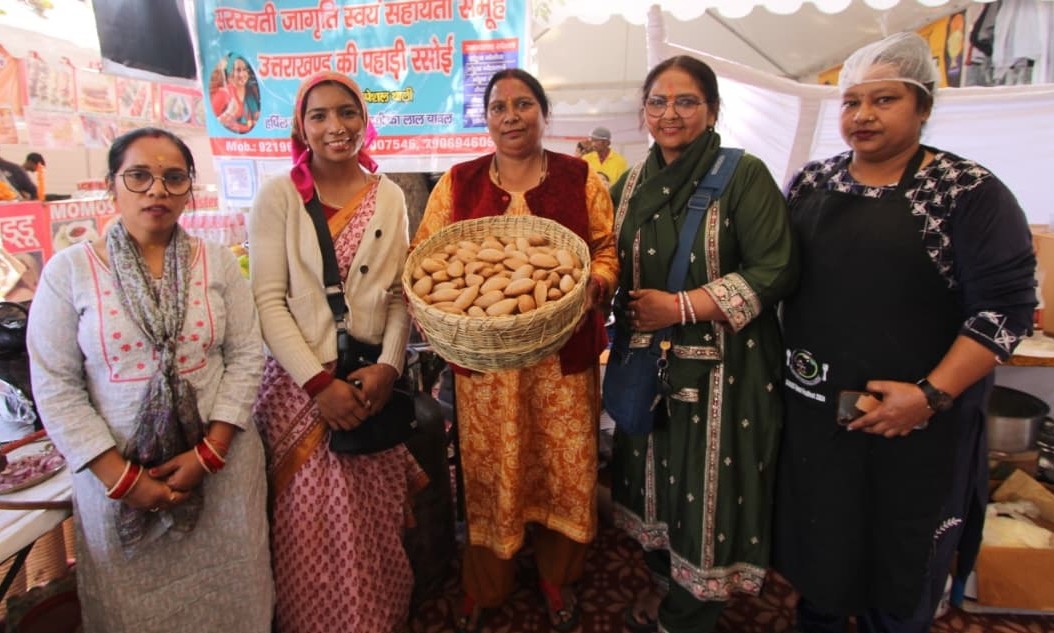
One of the most prominent contributors to this movement is Menka Jagriti Samiti, a self-help group operating since 2009 under the leadership of Pooja Tomar, Jagriti Tomar and Shaily Kamboj. The group has generated employment for more than 100 women, including those who are financially vulnerable, divorced, widowed or lacking family support.

Their vision is centred on promoting Uttarakhand’s nutritious traditional grain, ‘Mandua’, among children and youth. At their stall, ‘Manduve ke Spring Rolls’, ‘Manduve ka Pizza’, ‘Manduve ke Momos’ and Gujiya drew significant attention. By presenting a heritage grain in familiar fast-food formats, they are bridging generational taste gaps while preserving local food identity. Having participated in Vasantotsav for several years, the group described their experience at Raj Bhavan as both motivating and empowering. In 2026 alone, nearly 15 stalls run by women’s groups under their network are part of the festival.
Neha Panwar’s “Dad and Daughter” stall showcased Siddu, a traditional dish from Himachal Pradesh, known for its fermented dough and nutrient-rich filling of pahadi herbs and dry fruits. While Siddu is usually prepared with refined wheat flour, Panwar offers a healthier alternative using rice flour, enhancing its nutritional profile while retaining authenticity. The innovation resonated well with visitors seeking wholesome yet culturally rooted options.

Preeti Maindoliya’s Dehradun-based venture “Pyari Pahadan” presented a diverse range of Garhwali, Kumaoni and Jaunsari cuisines. Her fusion menu included manduve ke chhole bhature, manduve ke samose, manduve ki coffee and manduve ke spring rolls, alongside traditional pahadi thali, gehet ke pakode and urad ke pakode. The stall reflected how local entrepreneurs are consciously adapting traditional recipes to contemporary tastes without compromising cultural essence.
Ashish Pradhan’s “Newar – Taste of Love” added a cross-cultural dimension to the festival. Serving Nepali cuisine for seven years and participating in Vasantotsav for the past two, the stall specialises in Newari Khaja, including Fini, Sel Roti and Thakali thali. Pradhan acknowledged the exposure and constructive feedback received at Raj Bhavan, noting that such platforms help sustain traditional cuisines in competitive urban markets.
Similarly, Sabki Saheli Foundation Trust, led by Adhyaksha Pooja Subbachand along with trustees Uma Upadhyay and Sunita Chettri, showcased sel roti, batuk, pakodi and chai. Their aim is to familiarise younger audiences with Nepali cultural food through accessible festival spaces.
For ‘Udaan: Pahadon Ki’(Udaan Aajeevika Svayam Sahayata Samuh), this was their first participation at Raj Bhavan. Led by Meena Chamoli, Meena Panwar and Reena Panwar, the group runs a home-based cloud kitchen serving Garhwali cuisine. Their offerings included swale, urad dal ki pakodi, gehet ke swale and a Garhwali thali featuring rajma ki dal, laal bhaat, jhangore ki kheer, kode ki roti, meetha bhaat, chainsu and taidu ki sabji. Snack items such as rontane and gujiya reflected the richness of traditional hill cuisine. Participation at Vasantotsav provided them with visibility beyond local clientele.
Krishna Prasad Raturi from Saura, Bhatwadi, representing “Ravain Rasoi”, has been participating in Raj Bhavan exhibitions since 2008. A progressive farmer with over 100 malta trees, Raturi serves Pahadi Malte ki Khatai—a preparation made from malta, chakotra, galgal, coriander, carrot, beetroot and pisyu lon (traditional salt), blended with 16 spices. He believes such authentic, lesser-commercialised flavours deserve national and international recognition, and credits institutional support for sustaining his initiative.
The third day of Vasantotsav 2026 demonstrated that food is not merely sustenance, it is identity, memory and innovation combined. By transforming Mandua into Momos and Pizza bases, reinterpreting Siddu, and presenting traditional thalis in contemporary settings, entrepreneurs are ensuring that Uttarakhand’s culinary heritage evolves rather than fades. All the stall members expressed their gratitude to the Governor and the Government of Uttarakhand for their support in reaching out to Lok Bhavan, showcasing their culinary skills and proudly representing the state’s cuisine.
For the students of SoMCS, Doon University, the exploration of these stalls revealed how cultural food adapts to modern demands while retaining its core values. Vasantotsav thus emerges not only as a celebration of spring but as a dynamic platform where heritage grains, regional recipes and entrepreneurial creativity come together, serving tradition with a modern twist.
(The article is created by the faculty and students of the School of Media and Communication Studies, Doon University; Photo Credit: Balram Gaur, Manan Sharma.)
About The Author