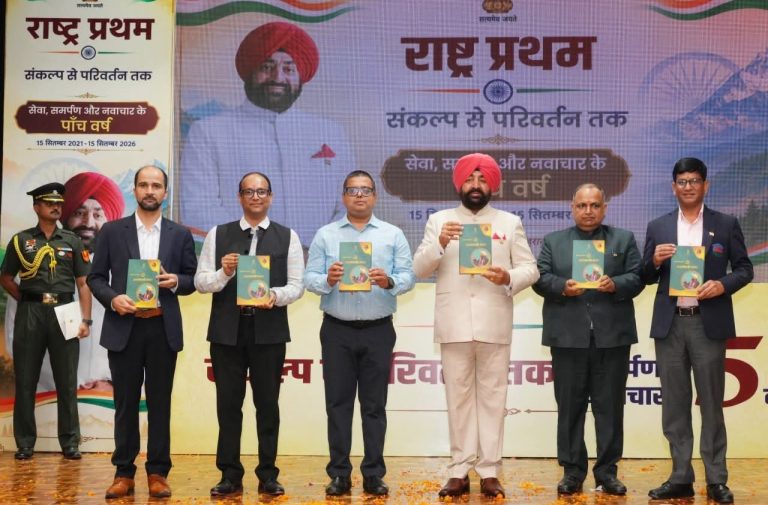
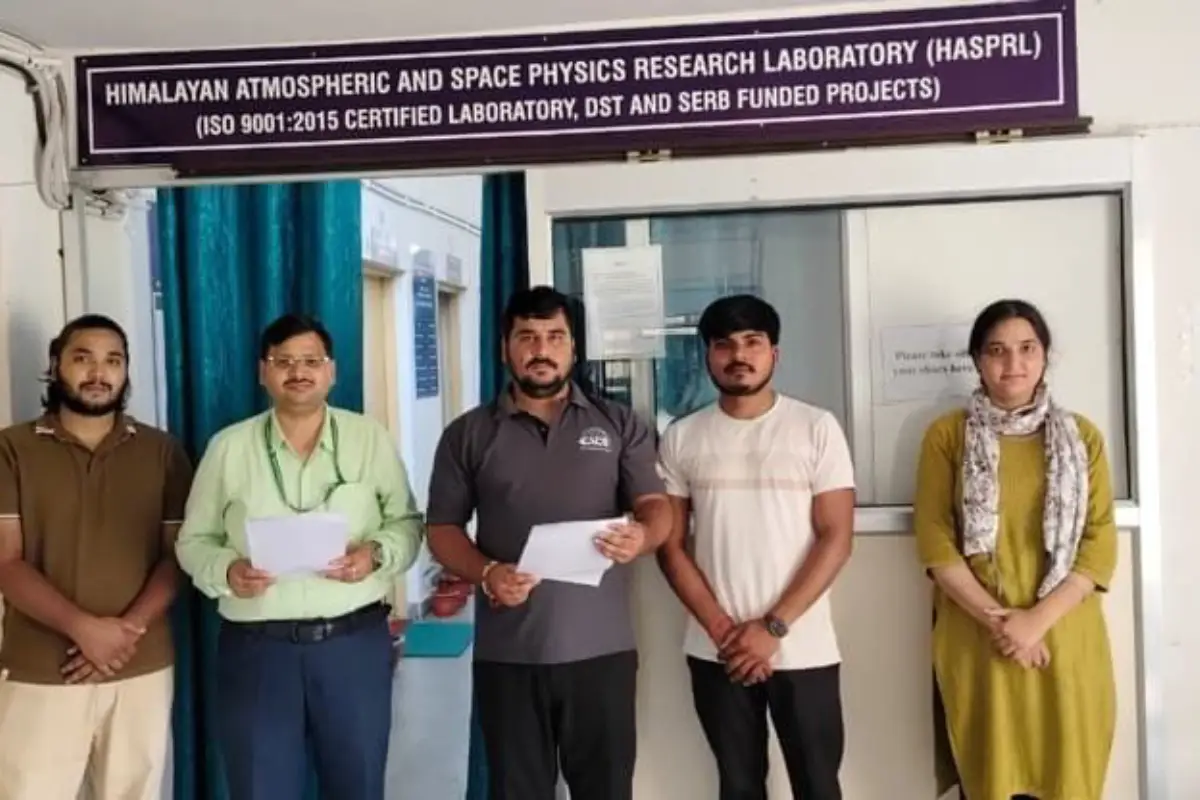
Srinagar (Garhwal), September 15: Contrary to the common perception that Himalayan valleys always have clean and pristine air, air quality data from the Garhwal Valley indicate growing environmental concerns. A year-long study conducted by the Himalayan Atmospheric and Space Physics Research Laboratory (HASPRL) at Hemvati Nandan Bahuguna Garhwal University found that PM2.5 and PM10 remained the major air pollutants in the region. The study also recorded exceptionally high ozone concentrations on certain days. Based on an analysis of air quality data recorded between September 15, 2025 and September 15, 2026, the fifth Greenhouse Gas and Air Quality Information Bulletin was released on Tuesday at the Department of Physics, Chauras Campus. The study analysed data from 339 valid days. According to the findings, the annual average concentration of PM2.5 was 73.30 µg/m³, while the average concentration of PM10 was 100.48 µg/m³. PM2.5 exceeded the prescribed 24-hour limit on 169 days, while PM10 exceeded the limit on 146 days. The maximum 8-hour average concentration of ozone (O₃) exceeded the CPCB limit of 100 µg/m³ on 26 days, accounting for 7.7% of the valid observation days. December 19 Ozone Event Raises Concern One of the most significant observations was recorded on December 19, 2025, when the 8-hour average ozone concentration reached 634.13 µg/m³. On the same day, the hourly ozone concentration exceeded 880 µg/m³. According to scientists, the unusual episode may have been influenced by the trapping of pollutants within the valley during winter, local biomass burning and prevailing meteorological conditions. However, the researchers emphasised that detailed scientific analysis is required to establish the precise causes of this exceptional ozone event. PM Levels Higher in Winter, Ozone and CO Rise During Summer The study also identified clear seasonal variations in air pollution. During winter, temperature inversion and atmospheric stability resulted in the accumulation and trapping of pollutants within the valley, leading to higher particulate matter concentrations. During summer, higher temperatures, dust and intense solar radiation contributed to increased ozone formation through photochemical processes. An increase in ozone and carbon monoxide (CO) was also observed during this period. During the monsoon season, rainfall helped remove particulate pollutants from the atmosphere through wet scavenging, resulting in relatively lower PM concentrations. The report further revealed that CO exceeded the prescribed limit on 22 days. In contrast, the average concentrations of other major gaseous pollutants, including NO₂, SO₂, NH₃ and benzene, remained within the respective CPCB standards. “Good Ozone is High; Bad Ozone is Nearby” On the occasion of the International Day for the Preservation of the Ozone Layer, Dr. Alok Sagar Gautam emphasised the importance of understanding ozone according to its altitude. Stratospheric ozone acts as a natural protective shield for life on Earth by absorbing harmful ultraviolet (UV) radiation from the Sun. In contrast, elevated concentrations of ozone near the Earth’s surface make it a harmful air pollutant. He conveyed the message: “Good Ozone is High; Bad Ozone is Nearby.” Need for Enhanced Long-Term Monitoring in the Himalayas Dr. Gautam said that assessing air quality in a sensitive region such as the Himalayas solely on the basis of annual averages is not sufficient. Continuous monitoring of short-term and episodic high-pollution and high-ozone events is equally important. He said that combining satellite-based observations with ground-based measurements can provide a more comprehensive understanding of the relationships among Himalayan atmospheric processes, UV radiation, ozone, air quality and climate change. He also appealed to the public not to dispose of old refrigerators and air-conditioners in the open or through improper methods. Safe recovery and disposal of refrigerants, regular maintenance of cooling equipment, and reducing vehicle emissions and other sources of pollution can contribute to better air quality and help control ground-level ozone formation. While releasing the bulletin, Prof. Trilok Chandra Upadhyay, Head of the Department of Physics, appreciated the initiative and said that the benefits of scientific research should reach society. He congratulated Dr. Alok Sagar Gautam and his research team—Amandeep Vishwakarma, Ankit Kumar and Saraswati Rawat—for undertaking the public-oriented scientific initiative. Key Findings at a Glance · 339 — Valid days of data analysed · 26 days — O₃ exceeded the CPCB 8-hour limit · 7.7% — Valid days on which O₃ exceeded the prescribed limit · 634.13 µg/m³ — 8-hour average O₃ concentration recorded on December 19, 2025 · 880+ µg/m³ — Maximum hourly O₃ concentration recorded on the same day · 73.30 µg/m³ — Average PM2.5 concentration · 100.48 µg/m³ — Average PM10 concentration · 169 days — PM2.5 exceeded the prescribed limit · 146 days — PM10 exceeded the prescribed limit · 22 days — CO exceeded the prescribed limit
About The Author