
Workshop held on Climate Change & Adaptation
my uttarakhand news Bureau
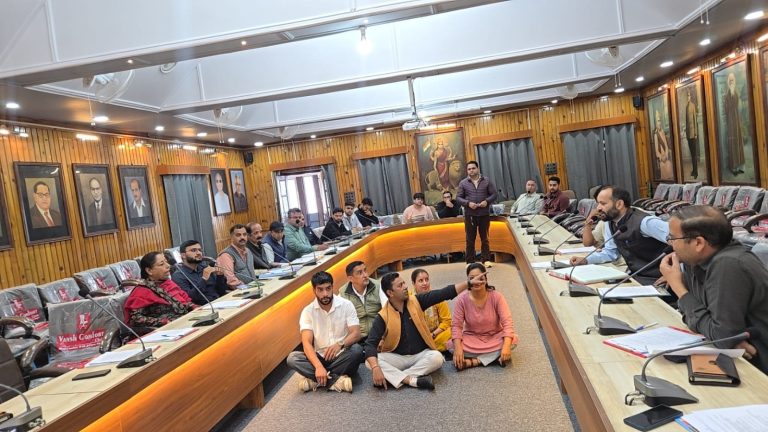
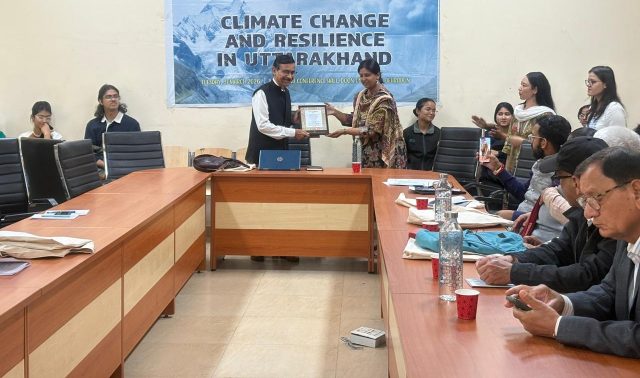
Dehradun, 1 Apr: Through the joint efforts of Pairvi, Delhi and Doon University, Dehradun, an important one-day workshop was organised on 31 March to address climate change and its impacts. This workshop was part of a series of consultations and workshops conducted by Pairvi in the state, focusing on topics such as climate governance, traditional knowledge, and adaptation in mountain regions. The main objective of the event was to create a platform for policymakers, researchers, civil society, and local communities to engage in constructive discussions on government policies, their implementation, the impacts of climate change, and, both, traditional and scientific approaches to adaptation.
Introducing the theme, Pairvi Director Ajay Jha stated that the Himalayan region is currently considered one of the most climate-vulnerable regions globally. In Uttarakhand, events such as erratic rainfall, glacier melting, frequent landslides, and forest fires are becoming increasingly common. Problems such as unplanned infrastructure development and deforestation have further intensified the severity of this crisis in the state, making it essential to strengthen efforts related to climate resilience, adaptation, and mitigation.
Dr Abhilasha Kannaujia, Assistant Professor in the Department of Geography at Doon University, stated that the challenges of climate change are not only damaging ecosystems but are also directly affecting the livelihoods of small farmers, women, and local communities.
During various sessions of the workshop, distinguished guests including Padma Shri awardee Kalyan Singh Rawat, Jai Raj (former PCCF Uttarakhand), Prof Virendra Painuli (IIT Roorkee, retired), Suresh Bhai (social worker), Megha Prakash (independent journalist), and other speakers discussed in detail the factors worsening climate change in Uttarakhand, its impacts on the general population, and scientific as well as traditional efforts to address these challenges. The speakers emphasised that along with scientific solutions, traditional ecological knowledge held by local communities—such as water conservation, biodiversity protection, and climate-resilient farming—should also be incorporated into policy frameworks.
The workshop also included discussions on identifying challenges and gaps in climate planning, along with recommendations and local action priorities to ensure a sustainable future for Himalayan states.
Prof Kusum Arunachalam, Paritosh Kimothi, Prem Pancholi, Laxmi Bisht, and other speakers stated that climate change should no longer be viewed merely as an academic subject, but must be made a priority and addressed as a public movement for policies suited to the state’s unique geography and characteristics. It is important to understand both the carrying capacity and bearing capacity of the mountains so that development can be regulated accordingly.
Dr Shantanu Sarkar, Director ULMMC, stated that significant work is being done at the levels of investigation and mitigation to address landslide challenges in Uttarakhand, but there is a need to prepare preventive measures well in advance of disasters. He added that sharing information about disaster management and early warning systems with communities can help minimise losses during disasters.
Along with representatives from various institutions, a large number of students also participated in the workshop.
Key Highlights of the Workshop were:
Integration of Traditional and Scientific Knowledge: Special emphasis was placed on integrating centuries-old ecological knowledge of mountain communities (such as water conservation and traditional farming) with modern scientific approaches.
Identification of Policy Gaps: Experts and stakeholders collaboratively identified gaps in Uttarakhand’s current climate planning and governance to make future policies more effective.
Inclusive Participation: The workshop prioritised the voices of directly affected communities, including women’s groups, youth, and small farmers, alongside policymakers.
About The Author